Top boutique getaways in america: An Operational Selection Guide
The contemporary American travel marketplace is defined by the commoditization of experience. As distribution systems and third-party aggregators have homogenized the discovery process, the traveler is frequently presented with an algorithmic veneer that masks the underlying operational reality of the lodging asset. The concept of “boutique” has suffered from this expansion, transitioning from a designation of intimate, operationally distinct properties into a diluted marketing term applied to any facility under two hundred rooms. To the uninitiated, this is merely a branding nuance. To the strategist, it represents a critical failure in procurement that leads to significant variability in service delivery and asset performance.
When one begins to construct plans for a holiday, the objective must shift from simple scheduling to asset management. A successful strategy is not predicated on finding the most “exclusive” venue; it is rooted in the alignment of the property’s operational infrastructure with the specific requirements of the objective. Whether the goal is a cognitive reset, a high-stakes corporate negotiation, or an immersive research expedition, the boutique environment acts as a force multiplier—or a significant liability—depending entirely on the rigor of the initial selection process. This guide provides the framework required to cut through the marketing noise and identify the assets that truly qualify as the Top boutique getaways in america.
Understanding “Top boutique getaways in america”

The inquiry into the Top boutique getaways in america is frequently misidentified as a leisure-oriented endeavor. In reality, the professional architecting of these plans requires the same attention to detail as a supply chain audit. The “boutique” descriptor implies an independence from standardized, corporate-led operating procedures. This independence is a double-edged sword: it offers the potential for profound personalization and localized cultural immersion, but it simultaneously introduces operational fragility. Without the safety net of corporate scale, the independent asset is entirely dependent on its local management team, property maintenance schedule, and revenue management philosophy.
The most common oversimplification is the belief that high aesthetic quality equates to high service reliability. A design-forward hotel may be visually stunning, yet operationally hollow. Plans that rely solely on aesthetic markers often fail when confronted with complex logistical requirements, such as high-speed connectivity, dietary precision, or noise control. Mastery in this domain involves evaluating the property’s “operational maturity”—the capacity for the staff and the physical plant to deliver consistent results under stress. It is not about the lobby design; it is about the system design.
Deep Contextual Background
The evolution of boutique lodging tracks directly with the rise of the “experience economy” and the concurrent decay of the mid-20th-century Grand Hotel model. Historically, luxury was synonymous with scale, uniformity, and the aggressive projection of brand status. The shift toward the boutique model—accelerated by the internet’s ability to allow small, independent operators to reach global audiences directly—was a correction against the perceived sterility of the mega-chain.
However, we are now in the second, more cynical phase of this evolution. Large-scale hospitality conglomerates have recognized the market demand for “boutique” and have responded by creating “soft brands”—collections of independent assets that retain their unique name and facade but are underpinned by centralized reservation, loyalty, and procurement platforms. This creates a fascinating tension for the strategist. A property may look and feel independent, yet operate with the rigid policy-book of a multinational corporation. The ability to distinguish between a “true” independent asset and a “corporate-boutique” soft brand is the bedrock of advanced travel procurement.
Conceptual Frameworks and Mental Models
To impose professional discipline on the process of evaluating travel assets, one must apply rigorous mental models:
-
The Asset Utility Matrix: This framework separates a property into two distinct vectors: Infrastructure (physical plant, soundproofing, ergonomics, network speed) and Service (staff-to-guest ratio, anticipation of need, operational flexibility). A strategic planner must identify which vector is primary for the stay.
-
The Frictionless Index: Analyze the property’s entry and exit procedures. A truly high-end boutique minimizes administrative friction—the “check-in” should be an invisible transition, not a process of data entry and credit card verification.
-
The Cultural Integration Model: Evaluate how the property bridges the gap between the guest and the local environment. A superior boutique asset does not just exist in a neighborhood; it functions as a portal to it, providing access to curated local networks that a large-chain hotel cannot replicate.
Key Categories or Variations
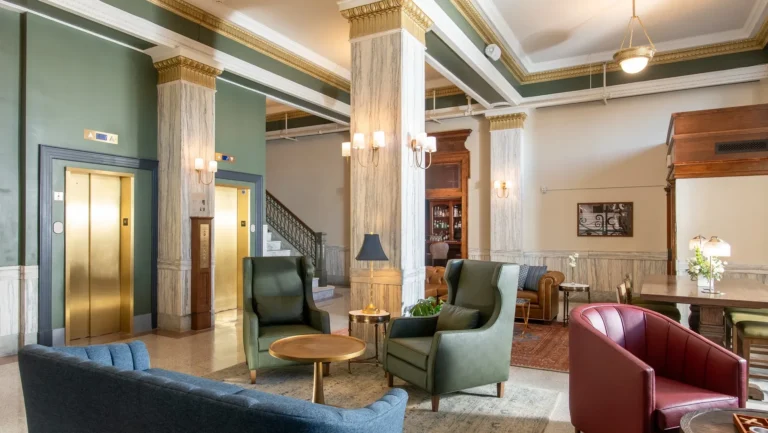
When evaluating potential options, the practitioner must avoid the “aesthetic trap.” Do not choose an Adaptive Reuse property—often beautiful but structurally idiosyncratic—for a high-intensity work trip that requires a seamless office environment. Match the asset category to the strategic objective. Finding the Top boutique getaways in america lies in the willingness to match the asset’s strengths to your specific operational needs.
Detailed Real-World Scenarios
-
Scenario 1: The High-Stakes Merger. A team of five requires a secure, high-tech base of operations. Decision: Prioritize “Corporate Soft-Brand” boutique hotels. The infrastructure for data security and bandwidth is standardized. Failure Mode: Selecting an “Owner-Operated” historic boutique that lacks the IT infrastructure to handle secure document transfer.
-
Scenario 2: The Architectural Research Trip. An individual requires access to local cultural hubs and a high-aesthetic environment. Decision: “Adaptive Reuse” properties. Constraint: Accept the inherent trade-off in room size and HVAC modernity. Second-Order Effect: The immersion into the building’s history provides better cultural context than a modern luxury tower.
-
Scenario 3: The Extended Consultative Sabbatical. A subject matter expert needs 30 days of productivity. Decision: Negotiate a direct contract with an “Owner-Operated” boutique for a “Service Opt-Out.” Decision Point: By limiting housekeeping and breakfast services, the owner can reduce their operational overhead and pass the savings on, while the guest gains uninterrupted access to their space.
Planning, Cost, and Resource Dynamics
The economic management of these stays requires a shift from “sticker price” to “Total Landed Value” (TLV).
When managing travel plans, treat the auxiliary costs (parking, “resort fees,” internet surcharges) as primary line items. Often, the property with the higher base rate is cheaper once the “hidden” operational fees are calculated into the TLV.
Tools, Strategies, and Support Systems
-
The Pre-Arrival Audit: Email the property management 72 hours prior to arrival with a specific, technical request (e.g., regarding network latency or room placement). Their responsiveness is a leading indicator of their service-level maturity.
-
Meta-Review Analysis: Use review aggregators to filter for “3-star” reviews. These reviews provide the most empirical data on operational failures (noise, billing, maintenance) that the property’s marketing team has not curated.
-
The RFQ Template: For longer stays, issue a formal Request for Quote (RFQ). This forces the property to disclose all “all-in” costs in writing, eliminating the surprise charges common at checkout.
-
Local Network Leveraging: Use professional contacts to verify the property’s status in the local ecosystem. Properties that have deep local ties are often more resilient and better managed.
-
Offline Booking Engines: Use GDS-based tools that are invisible to the public. These portals often provide access to “preferred rates” that bundle in amenities that are otherwise billable. When vetting the Top boutique getaways in america, these offline channels often reveal significantly better value.
Risk Landscape and Failure Modes
Risk in the boutique sector is rarely catastrophic; it is corrosive. It is the accumulation of minor service failures that destroy the value of the trip.
-
Management Drift: Boutique properties are highly dependent on the “gatekeeper”—the General Manager. If that person changes, the entire operational culture can collapse within a fiscal quarter.
-
The Aesthetic-Functional Gap: Properties that prioritize “design” over “durability” often feature unusable furniture, poor lighting, and nonexistent soundproofing.
-
Logistical Isolation: Remote boutique assets often suffer from single-point-of-failure supply chains. If the regional logistics fail, the property’s standard of service effectively vanishes. A recurring failure in many Top boutique getaways in america is the failure to maintain service standards when supply lines are interrupted.
Governance, Maintenance, and Long-Term Adaptation
Treat your travel procurement as a portfolio that requires periodic auditing. A formal methodology for identifying and utilizing these assets should include a review cycle.
-
Audit Cycles: Every quarter, perform a digital review of your preferred assets. Have they changed ownership? Is the feedback consistent?
-
Adjustment Triggers: If a property fails to meet a specific standard (e.g., soundproofing, network stability) twice, remove it from the active portfolio.
-
Documentation Taxonomy:
-
Standard Operating Procedure (SOP): The “how.”
-
Emergency Override Protocol: The “what if the system dies.”
-
Exception Handling Log: A living document of what went wrong, used to patch the systems.
-
Measurement, Tracking, and Evaluation
Evaluation must move beyond subjective “how did it feel” metrics to empirical performance indicators.
-
Leading Indicators: The responsiveness of the management during the procurement phase. A team that struggles to negotiate professionally will struggle to deliver a professional stay.
-
Lagging Indicators: “Operational Variance”—the delta between the planned itinerary and the actual execution, caused by site-specific failures (e.g., unexpected fees at checkout).
-
Qualitative Signals: Observe how staff react to non-standard requests. Do they solve the problem, or do they refer you to a policy manual? The latter is a sign of a “process-heavy” operation that has lost its boutique agility.
Common Misconceptions and Oversimplifications
-
Myth: “Boutique hotels are inherently more transparent.” Correction: They are often less transparent because they lack the standardized corporate disclosures of major chains.
-
Myth: “The owner is always present.” Correction: The owner is often invisible; the GM is the person who defines the experience.
-
Myth: “Design is the most important factor.” Correction: Design is the “hook,” but service is the “anchor.” A stunning hotel with poor service is an expensive disappointment.
-
Myth: “I can avoid fees by using points.” Correction: Many properties have introduced mandatory “amenity fees” that even points-based bookings must pay.
Ethical and Contextual Considerations
The selection of a luxury asset carries an inherent ethical responsibility. Many boutique properties are located in gentrifying neighborhoods or fragile ecosystems. When evaluating the viability of an option, consider the property’s relationship with its local community. Does the boutique operation support local labor, or does it import staff while displacing residents? Selecting assets that demonstrate a genuine commitment to their location is a form of risk mitigation; properties that alienate their local ecosystem eventually become isolated and operationally brittle. Furthermore, when negotiating, maintain a standard of professional integrity. Seek a fair value exchange, not an extraction of margin that threatens the viability of the local business.
Conclusion
The pursuit of the right boutique asset is fundamentally an exercise in operational strategy, not interior design. By approaching the process of identifying Top boutique getaways in america with the rigor of a project manager rather than a vacation planner, organizations and individuals can secure environments that do more than house a stay—they provide a competitive advantage. Excellence in this domain is found in the willingness to look beneath the surface, the skepticism required to challenge the aesthetic veneer, and the intellectual honesty to prioritize function over form. A truly successful stay is one where the environment becomes an invisible, yet powerful, facilitator of the objective at hand. The asset is merely the substrate; the plan is the foundation. Identifying Top boutique getaways in america is a deliberate act of procurement that yields long-term rewards for those willing to do the due diligence.