Luxury boutique resorts usa: A Senior Editorial Strategy for Asset Procurement
The American high-end lodging market has undergone a fundamental bifurcation. Historically, the definition of luxury was tethered to standardization; the grand hotels of the mid-20th century provided comfort through the assurance of consistency. A guest could travel from New York to Los Angeles and encounter an identical suite, an identical service protocol, and an identical degree of administrative reliability. However, the contemporary traveler—and increasingly, the professional organizer—now rejects this homogeneity. The ascent of the boutique model represents a departure from the “franchised” experience, moving toward assets defined by architectural specificity, localized narratives, and intentional service friction.
This shift, while culturally enriched, introduces significant procurement complexity. Unlike a global hotel chain that relies on massive, algorithmic back-offices to mitigate error, the independent resort operates on idiosyncratic, often brittle, management structures. When one investigates Luxury boutique resorts usa, the inquiry is rarely about finding a “place to stay.” It is about identifying a high-performance environment that aligns with a specific objective, whether that objective is restorative isolation, collaborative enterprise, or cultural immersion. The failure to distinguish between an asset that is genuinely “boutique” and one that is merely “branded-as-boutique” is the primary cause of professional travel failure.
Understanding Luxury boutique resorts usa

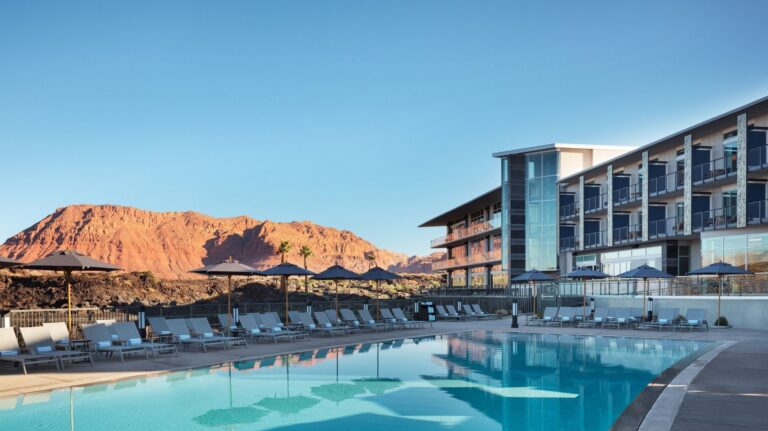
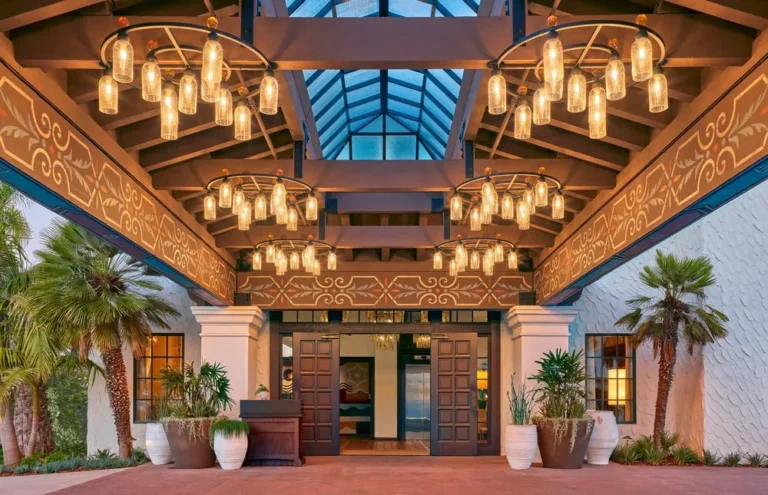
The term “boutique” has become diluted, functioning more as a marketing adjective than an operational descriptor. When analyzing Luxury boutique resorts usa, one must strip away the digital marketing veneer. These properties are essentially distinct, small-scale enterprises that require a different set of evaluation criteria than large-scale commercial hotels. An oversimplification risk exists where travelers conflate the resort’s visual aesthetic with its operational capability. A property may boast impeccable design—curated art, locally sourced materials, dramatic lighting—while possessing an inadequate back-of-house infrastructure. This creates a disparity between the “front-stage” experience and the “back-stage” reality.
To understand the sector, one must recognize that a resort is not merely a hotel with more acreage; it is a system of land management, labor scheduling, and supply chain logistics. A resort with 50 villas in a remote setting faces operational pressures—utilities, security, waste management, staff housing—that an urban boutique hotel does not. The “luxury” in the boutique resort context is not just about the thread count of the linens; it is about the fluidity and responsiveness of the resort’s operational ecosystem. The goal is to identify properties where the investment in “form” has been matched by a commensurate investment in “function.”
Deep Contextual Background
The evolution of the resort sector in the United States has tracked closely with changes in American real estate and cultural aspirations. In the early 20th century, the “Great Resort” was an institutional beast—vast, self-contained, and often rigid. As global travel matured, the 1980s and 90s saw the birth of the boutique movement as a reaction to this perceived sterility. Visionaries began to reclaim unique sites—desert compounds, coastal enclaves, mountain retreats—and reinvented them as experiential platforms.
We have now entered the third phase of this evolution: professionalization. The most successful Luxury boutique resorts usa are no longer run by solitary, passionate owners but by sophisticated management groups that apply disciplined operational standards to the “boutique” aesthetic. This professionalization is a double-edged sword. It has improved consistency and reliability, but it has also introduced a degree of standardization that can undermine the very “unique” quality that attracts the traveler. The challenge for the modern planner is to find the intersection of institutional reliability and authentic, localized narrative.
Conceptual Frameworks and Mental Models
To impose professional discipline on the procurement process, apply the following frameworks to evaluate prospective properties:
-
The Operational Autonomy Gradient: Determine if the resort is a “satellite” property of a larger group or a true independent. Satellite properties benefit from shared resources but often suffer from “corporate drift.” True independents offer high-fidelity service but are prone to higher operational risk.
-
The Asymmetric Information Model: Recognize that the resort possesses 90% of the information about its own state (maintenance schedules, staffing issues, upcoming renovations), while the guest possesses 10%. Your procurement strategy must be designed to force this information to the surface before booking.
-
The “Invisible Infrastructure” Audit: Assess the property’s dependence on third-party utilities. A resort that generates its own power, treats its own water, and manages its own waste is a more stable asset than one that relies on precarious local municipal systems.
Key Categories or Variations
The decision logic for choosing among these categories should be driven by the specific intent of the stay. An “Adaptive Reuse Compound” is an exercise in cultural appreciation, whereas a “Remote Wilderness Enclave” is an exercise in logistical endurance.
Detailed Real-World Scenarios
-
Scenario 1: The Executive Offsite. A team of twelve requires a setting for high-intensity strategic planning. Decision Point: Prioritize connectivity and acoustic privacy over visual spectacle. Constraint: Avoid properties where the primary communal space is a high-traffic lobby bar. Failure Mode: Assuming “luxury” equates to “productivity.”
-
Scenario 2: The Deep-Focus Sabbatical. An individual requires three weeks of solitude. Decision Point: Focus on the resort’s “Staff-to-Villa” ratio. Constraint: A resort that is “all-inclusive” may introduce too much service interaction, hindering focus. Failure Mode: Booking a service-heavy resort when autonomy was the goal.
-
Scenario 3: The Multi-Generational Gathering. A family requires a venue that supports different age groups. Decision Point: Analyze the resort’s “Amenity Segregation.” Constraint: Does the property have dedicated zones for quiet versus activity? Failure Mode: Booking a property with a single, shared pool area that becomes a chaotic bottleneck.
Planning, Cost, and Resource Dynamics
The economic management of high-end resorts requires a shift toward “Total Experience Cost” (TEC).
When analyzing the price of Luxury boutique resorts usa, consider that you are often paying for the cost of maintaining the property’s independence. It is a premium, but one that can be managed through direct procurement and rigorous pre-arrival communication.
Tools, Strategies, and Support Systems
-
The Direct-Inquiry Protocol: Bypass the booking engine. Send a detailed, professional email to the General Manager. The speed and specificity of the response is the most reliable leading indicator of the resort’s operational maturity.
-
The “Facility Audit”: Before finalizing, request the resort’s site map. Understand the layout. Does your villa share a wall with the service entrance? Is it next to the pool? Physical layout determines the quality of the stay.
-
The “Vendor Bypass”: For high-end stays, negotiate services (dining, excursions) directly with the resort’s department heads, not via the front desk.
-
Tech-Load Management: Never assume the resort’s internal internet is sufficient for professional use. Always carry redundant connectivity (e.g., Starlink, high-gain cellular hotspots).
-
Payment Hygiene: Ensure all contracts are handled via secure, institutional banking channels. Boutique resorts occasionally utilize insecure, third-party payment processors.
Risk Landscape and Failure Modes
Risk in the boutique resort sector is idiosyncratic. A property that is excellent in June may be operationally crippled by September due to staff turnover or the loss of a key vendor.
-
Management Drift: Boutique properties are highly dependent on the “gatekeeper”—the GM. If the GM leaves, the service culture often disintegrates.
-
The “Instagram” Trap: High-quality photography often hides physical neglect. If the resort’s social media is the only source of visual data, proceed with extreme caution.
-
Supply Chain Fragility: Remote resorts often suffer from “logistical isolation.” If the resort relies on a single road or a single utility line, a minor local disruption can lead to a systemic service failure.
-
Data Security: Boutique resorts frequently lack enterprise-grade cybersecurity. Assume the network is insecure and protect all sensitive data accordingly.
Governance, Maintenance, and Long-Term Adaptation
Treat your collection of preferred properties as a portfolio that requires periodic auditing. A formal methodology for auditing Luxury boutique resorts usa should include a rigorous, post-visit review.
-
The Asset Performance Ledger: Maintain a record of every property utilized. Document not just if it was “nice,” but if it was functional for the objective.
-
The Quarterly Audit: Re-evaluate your list of potential assets. A property that was excellent two years ago may have suffered from maintenance neglect or management changes.
-
Layered Checklist:
-
Physical: Infrastructure, sound, light, ergonomic potential.
-
Operational: Service reliability, staff responsiveness, security.
-
Strategic: Privacy, environmental control, brand alignment.
-
Measurement, Tracking, and Evaluation
Evaluation must move beyond subjective sentiment. Rely on empirical performance indicators to determine if an asset is worth retaining in your portfolio.
-
Leading Indicators: The responsiveness and technical accuracy of the management during the procurement phase. A team that struggles to negotiate professionally will struggle to deliver a professional stay.
-
Lagging Indicators: The “Operational Variance”—the delta between the planned itinerary and the actual execution, caused by site-specific failures (e.g., unexpected fees at checkout, room discrepancies).
-
Qualitative Signals: Observe how staff react to non-standard requests. Do they solve the problem, or do they refer you to a policy manual? The latter is a sign of a “tourist-first” operation, not an intimate, guest-first asset.
-
Documentation Example: The “Asset Utility Audit”—a post-stay document that ranks the property on specific metrics like acoustic isolation, network stability, and service autonomy.
Common Misconceptions and Oversimplifications
-
Myth: “Resorts are self-contained.” Correction: They are reliant on their local environment. A resort in a failing town will eventually become a failing resort.
-
Myth: “Design is an indicator of quality.” Correction: Design is often a distraction from operational inadequacy.
-
Myth: “I can rely on online reviews.” Correction: Reviews are often biased toward leisure travelers. A property that is great for a weekend couple’s trip can be a disaster for a team of professionals.
-
Myth: “The owner is always present to fix things.” Correction: The owner is often the person creating the friction by being too involved in the micromanagement of the guest experience.
Ethical and Contextual Considerations
The selection of boutique assets carries an inherent ethical responsibility. Many such properties are located in fragile ecosystems. When evaluating the viability of an asset, consider the property’s relationship with its local community. Does the resort support local labor, or does it import staff while displacing residents? Selecting assets that demonstrate a genuine commitment to their location is a form of risk mitigation; properties that alienate their local ecosystem eventually become isolated and operationally brittle.
Conclusion
The pursuit of the right boutique resort is fundamentally an exercise in operational strategy, not interior design. By approaching the process of identifying and selecting the Luxury boutique resorts usa with the rigor of a project manager rather than a vacation planner, organizations and individuals can secure environments that do more than house a stay—they provide a competitive advantage. Excellence in this domain is found in the willingness to look beneath the surface, the skepticism required to challenge the aesthetic veneer, and the intellectual honesty to prioritize function over form. A truly successful stay is one where the environment becomes an invisible, yet powerful, facilitator of the objective at hand. The asset is merely the substrate; the plan is the foundation.