Best Boutique Hotel Options: A Senior Editorial Audit of Operational Infrastructure
The modern lodging landscape has undergone a profound shift, moving away from the era of standardized corporate efficiency toward a model prioritized by identity, architectural specificity, and localized narrative. Yet, for the sophisticated observer, the proliferation of “boutique” branding has introduced a significant analytical challenge. The term has been diluted by marketing departments to encompass everything from massive city-center towers with rebranded lobbies to genuinely independent, design-led micro-hotels. Discerning the Best boutique hotel options requires stripping away the digital veneer and auditing the underlying operational architecture.
True boutique hospitality is not merely an aesthetic choice; it is a fundamental shift in risk and expectation. When an asset deviates from the “chain standard,” it introduces operational variability. For the high-level traveler or corporate planner, this variability is a double-edged sword. It offers the potential for profound inspiration and environmental alignment, but it also removes the safety net of institutionalized protocols. Understanding this sector requires a pivot from the consumer mindset to an operational one, viewing the hotel not as a place to sleep, but as a system of service delivery.
Understanding “Best boutique hotel options”
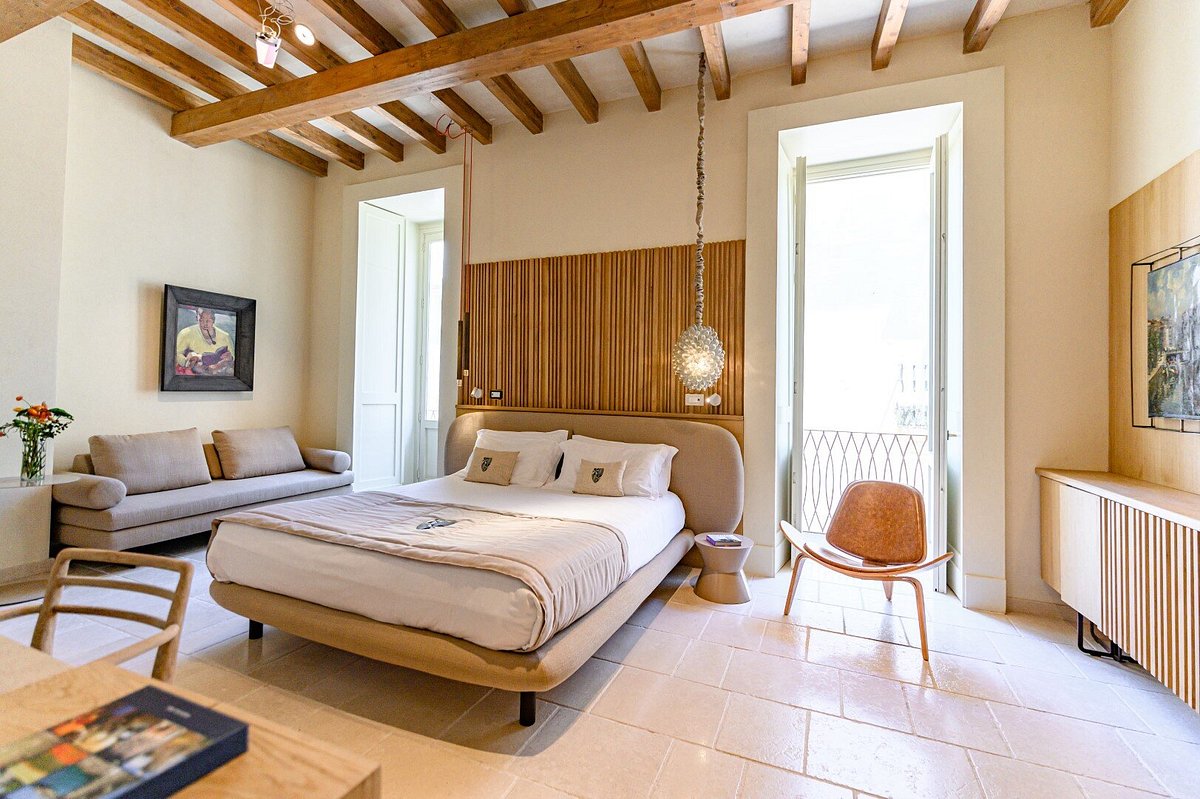
The category of “boutique” has become a semantic catch-all, making the identification of the Best boutique hotel options a matter of rigorous classification rather than mere preference. At its core, a boutique hotel should be defined by its intentionality. It is an asset designed with a specific guest demographic and a distinct narrative in mind. The common misunderstanding is that “boutique” equates to “luxury.” It does not. It equates to “curation.” An asset can be high-end, mid-market, or even budget-oriented, provided it maintains a cohesive, intentional identity that resists the dilution of corporate standardization.
The oversimplification risk is acute. Planners and travelers often fall into the “aesthetic trap,” assuming that if a property possesses sophisticated design, it inherently possesses operational excellence. This is a hazardous assumption. Often, the inverse is true. Properties that over-invest in ephemeral design elements frequently under-invest in the invisible infrastructure—data security, soundproofing, HVAC redundancy, and labor consistency. To find the Best boutique hotel options, one must invert the selection process: audit the infrastructure first, and evaluate the aesthetic only as a secondary layer.
Deep Contextual Background
The trajectory of the boutique sector is inextricably linked to the democratization of travel. In the mid-20th century, lodging was split between the opulent, singular landmark hotel and the emerging, utilitarian roadside motel. The boutique revolution, pioneered in the early 1980s, attempted to reconcile these extremes. The objective was to offer the intimacy and character of a grand hotel with the accessibility and contemporary relevance of modern living.
However, the late 2010s saw the “lifestyle brand” phenomenon, where major hotel conglomerates realized that the “boutique” label commanded a price premium. They began creating sub-brands that mimicked the boutique aesthetic while utilizing centralized, corporate operational backends. This created a bifurcated market. On one side are the “Corporate-Boutique” entities, providing consistent service with a veneer of individuality. On the other are the “Independent Boutique” entities, which offer genuine character but variable operational consistency. Navigating the Best boutique hotel options requires the strategist to understand where an asset falls on this spectrum. Is the individuality authentic, or is it a calculated product of a centralized marketing machine?
Conceptual Frameworks and Mental Models
To master the selection process, one must apply analytical frameworks that pierce the marketing narrative:
-
The Infrastructure-Amenity Duality: A property’s value should be measured by the ratio of infrastructure investment (power, data, sound control) to amenity investment (design, spa, decor). When the ratio favors amenities, the asset is fragile.
-
The Consistency-Novelty Spectrum: Every boutique hotel sits on a sliding scale. Properties toward the “Novelty” end provide intense, singular experiences but higher operational risk. Properties toward the “Consistency” end provide reliability but risk fading into the background of standard hospitality.
-
The Operational Transparency Model: How does the property handle service failure? A robust boutique asset has transparent, decentralized decision-making protocols. A weak asset relies on rigid hierarchies, which fail when the unexpected occurs.
Key Categories or Variations
| Category | Primary Strategic Focus | Best For | Typical Friction |
| Adaptive Reuse | Historic narrative | Narrative-driven events | Structural limitations |
| Design-Minimalist | Cognitive clarity | Deep work/Focus | Impractical layouts |
| Nature-Integrated | Environmental reset | Strategic offsites | Connectivity/Access |
| Urban Micro-Lux | Efficiency/Proximity | High-velocity travel | Small footprints |
| Private Estate/Buyout | Total control/Privacy | M&A/Confidentiality | High operational labor |
Selecting from the Best boutique hotel options is not about finding the “best” in a vacuum; it is about matching the asset category to the primary objective of the stay.
Detailed Real-World Scenarios
-
Scenario 1: The High-Stakes Investor Negotiation. The requirement is absolute privacy and controlled environments. Failure Mode: Selecting a boutique hotel located in a public thoroughfare with a high-traffic lobby. Resolution: Contracting a Private Estate or a secluded Urban Micro-Lux with restricted access, prioritizing physical security over design flair.
-
Scenario 2: The Distributed Team Innovation Retreat. The goal is collaborative focus. Failure Mode: Choosing a property that prioritizes visual density, leading to cognitive fatigue. Resolution: A Design-Minimalist property that offers ergonomic workspaces and high-utility environmental control, even if the “design” is less dramatic.
-
Scenario 3: The Multi-Day Client Product Launch. Requirements involve heavy AV and high-speed data. Failure Mode: Assuming “boutique” means “advanced connectivity.” Resolution: Auditing the property’s backbone capacity before commitment, ensuring the infrastructure supports the bandwidth load rather than just providing a pleasing aesthetic.
Planning, Cost, and Resource Dynamics
The economic management of boutique assets requires a departure from standard hospitality budgeting.
| Cost Component | Impact | Strategy |
| Base Asset Cost | Low-Moderate | Target “shoulder” seasons for 30-40% savings |
| Service Supplementation | Moderate | Budget for external concierge/security firms |
| Opportunity Cost | High | Value lost if the environment prevents productivity |
| Exclusivity Premium | High | Non-negotiable for privacy/confidentiality |
When budgeting for the Best boutique hotel options, planners must treat the asset as a platform. The “nightly rate” is merely the entry fee; the real cost lies in the operational support required to make that specific asset functional for a high-intensity use case.
Tools, Strategies, and Support Systems
-
The “Technical Audit” Protocol: Issue a Request for Proposal that demands specific technical specs (e.g., “provide a layout showing all electrical drop-points and floor load capacities”).
-
External Service Layering: Never rely on a boutique property’s in-house team for complex logistics. Contract external vendors for catering, security, and transport.
-
The “Dark” Walkthrough: Visit the asset during an active period to observe the reality of its operation, not just the sales pitch or the digital imagery.
-
Network Redundancy: Always install an independent mobile hotspot or satellite backup, regardless of what the property claims regarding their connectivity.
-
Service-Level Agreements (SLAs): For business-critical stays, formalize service expectations in a contract, even with boutique operators.
Risk Landscape and Failure Modes
Risk in the boutique sector is idiosyncratic rather than systemic. A large hotel chain has a “brand standard”; a boutique asset has an “owner’s standard.”
-
The Management Drift: Properties frequently change management or ownership. The asset that was world-class two years ago can be a liability today if the core leadership changes.
-
Infrastructure Fragility: Boutique properties are often older or retrofitted buildings. They frequently lack the redundant power, high-speed fiber, or acoustic isolation of modern, purpose-built luxury hotels.
-
The “Design-Over-Function” Trap: Aesthetic choices often create operational headaches—dim lighting, impractical power outlet placement, or furniture that is uncomfortable for prolonged use.
-
Service Silos: Smaller teams often struggle with cross-departmental communication. A failure in the front office often cascades into a failure in housekeeping or dining, with no corporate hierarchy to intervene.
Governance, Maintenance, and Long-Term Adaptation
Treat your collection of preferred assets as a portfolio.
-
The Asset Performance Ledger: Maintain a record of every boutique asset utilized. Document not just if the stay was “nice,” but if it was functional for the objective.
-
The Quarterly Audit: Re-evaluate your list of potential assets. A property that was excellent previously may have suffered from maintenance neglect or management changes.
-
Layered Checklist:
-
Physical: Infrastructure, sound, light, ergonomic potential.
-
Operational: Service reliability, staff responsiveness, security.
-
Strategic: Privacy, environmental control, brand alignment.
-
Measurement, Tracking, and Evaluation
Evaluation must move beyond subjective sentiment.
-
Leading Indicators: The responsiveness and technical accuracy of the management during the procurement phase. A team that struggles to answer logistical questions will struggle to solve logistical problems during the stay.
-
Lagging Indicators: The “Operational Variance”—the delta between the planned itinerary and the actual execution, caused by site-specific failures.
-
Qualitative Signals: Observe how staff react to non-standard requests. Do they solve the problem, or do they refer you to a policy manual? The latter is a sign of a “tourist-first” operation.
-
Documentation Example: The “Asset Utility Audit”—a post-stay document that ranks the property on specific metrics like acoustic isolation, network stability, and service autonomy.
Common Misconceptions and Oversimplifications
-
Myth: “Small properties are more personal.” Correction: They are often more limited. Personalization is only valuable if the base operation is robust.
-
Myth: “Design is an indicator of quality.” Correction: Design is often a distraction from operational inadequacy.
-
Myth: “I can rely on online reviews.” Correction: Reviews are often biased toward leisure travelers. A property that is great for a weekend couple’s trip can be a disaster for a team of executives.
-
Myth: “The owner is always present to fix things.” Correction: The owner is often the person creating the friction by being too involved in the micromanagement of the guest experience.
Ethical and Contextual Considerations
The selection of boutique assets carries an inherent ethical responsibility. Many such properties are located in gentrifying neighborhoods or fragile ecosystems. When evaluating the viability of the Best boutique hotel options, consider the property’s relationship with its local community. Does the boutique operation support local labor, or does it import staff while displacing residents? Selecting assets that demonstrate a genuine commitment to their location is a form of risk mitigation; properties that alienate their local ecosystem eventually become isolated and operationally brittle.
Conclusion
The pursuit of the right boutique asset is fundamentally an exercise in operational strategy, not interior design. By approaching the selection process with the rigor of a project manager rather than a vacation planner, organizations and individuals can secure environments that do more than house a stay—they provide a competitive advantage. Excellence in this domain is found in the willingness to look beneath the surface, the skepticism required to challenge the aesthetic veneer, and the intellectual honesty to prioritize function over form. A truly successful stay is one where the environment becomes an invisible, yet powerful, facilitator of the objective at hand. The asset is merely the substrate; the plan is the foundation.