How to manage boutique hotel bookings: A Senior Editorial Strategy for Procurement
The lodging industry has undergone a fundamental bifurcation. On one side, global conglomerates have perfected the science of standardized efficiency—automating the guest experience to a degree that minimizes friction but eliminates any semblance of institutional memory or personal recognition. On the other, the boutique sector has emerged, offering architectural specificity and narrative depth. For the high-level traveler or corporate planner, this shift has created an administrative burden. The lack of standardized systems in the boutique sector means that every transaction, from initial inquiry to final checkout, is subject to the unique operational temperament of the property.
Mastering the mechanics of independent lodging requires a move away from the consumer-facing platforms that dominate the market. When an asset lacks the corporate infrastructure of a major chain, the responsibility for operational reliability shifts entirely to the buyer. This creates a high-stakes procurement environment. Developing a robust system for How to manage boutique hotel bookings requires more than a credit card and a calendar; it demands the establishment of communication protocols, risk-assessment frameworks, and a clear understanding of the leverage dynamics that exist between the guest and a small, independent operator.
Understanding “How to manage boutique hotel bookings”

The phrase How to manage boutique hotel bookings is often misconstrued as an inquiry into booking engines or loyalty programs. In a professional procurement context, it is the strategic oversight of a supply chain. Boutique hotels, by definition, operate as “islands.” They are not nodes in a vast, interconnected network of shared data and protocol. Consequently, managing them is an exercise in relationship management rather than transaction processing. The oversimplification risk here is severe; planners often treat boutique properties as “luxury versions” of chain hotels, assuming that a high price point guarantees a high degree of operational redundancy. It does not.
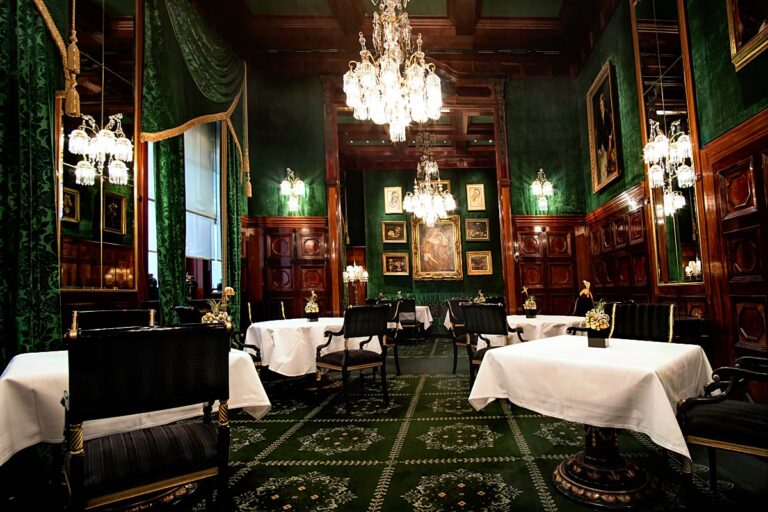
A boutique hotel with thirty rooms is a single point of failure. If their property management system (PMS) fails, or if a staffing crisis occurs, there is no corporate override, no sister property down the street to absorb the overflow, and no 24/7 call center to resolve the discrepancy. Understanding the process requires acknowledging that every booking is a bespoke agreement. The objective is to convert an opaque, high-risk transaction into a transparent, low-risk operational workflow. This requires moving the conversation away from the booking desk and toward the management office, establishing direct lines of communication, and formalizing the details of the stay well before arrival.
Deep Contextual Background
The evolution of hotel booking systems has moved from human-to-human telephonic reservations to the dominance of Global Distribution Systems (GDS) and, eventually, Online Travel Agencies (OTAs). This evolution served the needs of mass-market, standardized hotels. It allowed for the commoditization of inventory. However, the boutique sector was left in an awkward position. While they needed the visibility of the OTAs, they detested the dilution of their brand and the erosion of their margins. This tension led to the current state: a fragmented market where inventory is scattered across various platforms, often inconsistently, and where direct booking is the only way to ensure the level of service required for high-stakes travel.
We have witnessed the rise of “independent” tech stacks, where boutique owners choose their own disparate software solutions, leading to massive inconsistencies in how rooms are booked, modified, or canceled. For the sophisticated booker, this means that the “source of truth” regarding inventory is rarely the website. It is the person managing the reservations. The ability to navigate this fragmentation and assert control over the booking process is what separates the amateur traveler from the professional operator.
Conceptual Frameworks and Mental Models
To master the art of procurement in this sector, apply these frameworks:
-
The Inventory Leverage Model: Boutique hotels are hypersensitive to occupancy. A request for a “block” of rooms is a high-impact event for them. Understand that your leverage is proportional to the percentage of their inventory you are requesting.
-
The Communication Triage System: Never use public contact forms for complex bookings. Identify the “Reservation Lead” or “Sales Manager” within the first exchange. Bypass the front desk, which is optimized for check-in/check-out, not logistics.
-
The “Double-Blind” Confirmation: In a sector with high software variability, assume the initial confirmation is wrong. Use a multi-touch confirmation process: confirm via email, then follow up with a specific check on logistics (arrival time, dietary needs, transport) to force a secondary review of the reservation by the property.
As one learns How to manage boutique hotel bookings in a volatile market, these models act as filters to identify which properties are operationally mature and which are merely “lifestyle projects” masquerading as professional businesses.
Key Categories or Variations
| Category | Operational Maturity | Booking Difficulty | Resilience Strategy |
| Lifestyle Chainlet | High | Low | Leverage central booking office |
| Independent Urban | Moderate | Moderate | Build direct contact with GM |
| Remote/Unmanned | Low | High | Pre-arrival tech audit |
| Private Estate/Villa | N/A (Project-based) | Very High | Contract-heavy, legal oversight |
Selecting the right category is the first step in the booking process. If you treat a Private Estate like an Urban Independent hotel, the booking will fail because the operational requirements (staffing, security, catering) are fundamentally different.
Detailed Real-World Scenarios
-
Scenario 1: The Group Block Collapse. A planner reserves 40% of a boutique hotel’s inventory. The hotel gets a higher-paying buyout offer for the entire property. Decision Point: How to prevent displacement. Strategy: Secure a formal contract with specific “non-cancellation” clauses and a penalty structure that makes the buyout prohibitively expensive for the hotel.
-
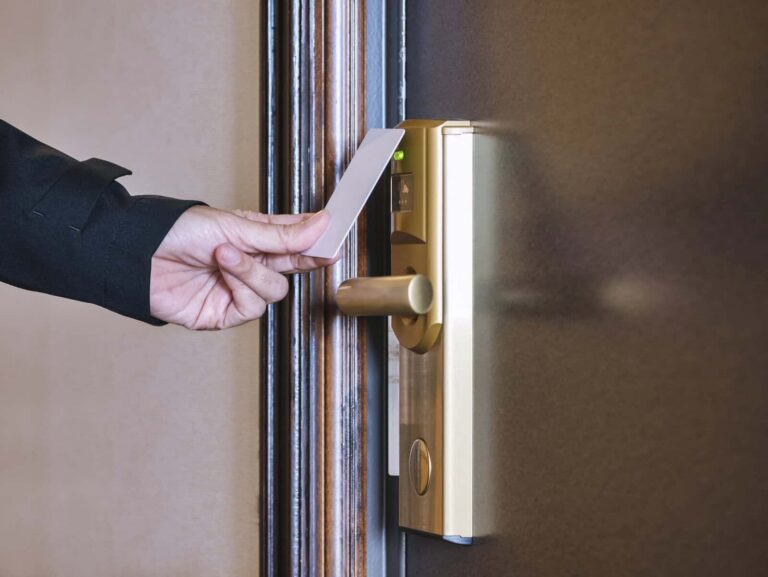
Scenario 2: The After-Hours Emergency. A guest arrives at 2:00 AM, but the property uses a “digital keypad” system that is malfunctioning. Decision Point: Who to contact? Strategy: Establish an “After-Hours Protocol” during the booking phase. Require a direct mobile number for the manager-on-call, not the general front-desk line.
-
Scenario 3: The Dietary/Aesthetic Customization. A high-profile guest requires strict compliance. Decision Point: How to ensure the message travels from the booking to the housekeeping team. Strategy: Use the “Confirmation Chain.” Send an email 72 hours, 48 hours, and 24 hours before arrival. This forces the property to re-verify the data in their system.
Planning, Cost, and Resource Dynamics
The initial cost of How to manage boutique hotel bookings remains a significant line item, primarily due to the “administrative overhead” of managing non-standardized assets.
| Cost Component | Impact | Strategy |
| Time/Labor | High | Centralize communication to one lead planner |
| Contracting/Legal | Moderate | Standardize a “Boutique Service Agreement” |
| Tech/Tools | Low | Utilize lightweight CRM for tracking |
| Operational Contingency | High | Budget 15% for “on-site resolution” (local help) |
Do not view the room rate as the total cost. View it as the base cost, then add the “Management Delta”—the cost of the time and resources required to ensure the booking is executed correctly.
Tools, Strategies, and Support Systems
-
The “Direct-Only” Mandate: Central to How to manage boutique hotel bookings is the shift away from OTAs. Use the property’s website only for information; use direct email or phone for reservations.
-
CRM for Travel: Maintain a simple database (Airtable or similar) that tracks property contacts, not just booking confirmation numbers.
-
Encrypted Communication: For high-stakes stays, use secure messaging protocols to transmit guest data, as boutique properties often have weak internal cybersecurity.
-
The “Pre-Arrival” Tech Audit: For properties using “keyless entry,” demand a test of the code or app 24 hours before the arrival window.
-
Local “Fixers”: For international boutique stays, have a contact on the ground (concierge firm or local fixer) who can physically intervene if the booking falls through.
Risk Landscape and Failure Modes
Risk in the boutique booking lifecycle is idiosyncratic. A large hotel chain has a corporate standard. A boutique asset has an “owner’s standard.”
-
The Inventory Phantom: The online inventory shows the room is available, but the system hasn’t synced with the physical reality. Always request a “manual block” of the room.
-
Management Drift: If the booking is made six months out, the GM who confirmed it may be gone by the time of arrival. Re-confirm one month out.
-
The “Bait and Switch”: Boutique rooms are unique. A “Deluxe Suite” might be 200 sq ft, while another is 600 sq ft. Never accept a “category” booking. Specify the exact room number.
-
Data Security: Boutique hotels are frequent targets for phishing. Ensure your booking confirmation is authentic by verifying payment through the property’s dedicated, encrypted portal.
Governance, Maintenance, and Long-Term Adaptation
The efficacy of How to manage boutique hotel bookings hinges on a consistent review loop. Every property that fails to perform, or performs perfectly, must be documented.
-
Post-Stay Reconciliation: After every trip, debrief. Did the room match the booking description? Was the communication protocol honored?
-
The Annual Scrub: Delete properties from your “preferred” list that have changed management or ownership.
-
The “Boutique” Scorecard: Rank properties not by their decor, but by their logistical reliability—the speed of confirmation, the accuracy of the billing, and the transparency of their cancellation policy.
Measurement, Tracking, and Evaluation
Evaluation must move beyond “did we sleep well?” to “did the system hold?”
-
Leading Indicators: The speed and specificity of the property’s response to a non-standard query (e.g., “Can you provide a floor plan for the suite?”). If they can’t, they are not operationally mature.
-
Lagging Indicators: The rate of “Reservation Inconsistency”—instances where the room provided did not match the room booked.
-
Qualitative Signals: Observe if the property uses “copy-paste” responses. Personal, specific answers indicate a high level of operational oversight.
-
Documentation Example: Create a “Reservation Log”—a single-page document for each trip that tracks the sequence of communication from the first inquiry to the post-stay checkout review.
Common Misconceptions and Oversimplifications
-
Myth: “Direct booking is always cheaper.” Correction: It is not about price; it is about control. Direct bookings give you the relationship with the GM.
-
Myth: “If I book through a luxury travel agent, they handle everything.” Correction: Agents are often limited by the same software constraints as you. They cannot fix a bad property’s internal failure.
-
Myth: “All ’boutique’ hotels are the same.” Correction: They are as varied as the owners who run them. Some are tech-forward; others are essentially glorified guesthouses.
-
Myth: “Online reviews are a reliable indicator of booking reliability.” Correction: Reviews focus on the stay, not the booking process. A property can be a great stay but a nightmare to book.
Ethical and Contextual Considerations
When you bypass OTAs and book directly, you are entering a symbiotic relationship with the property. You are providing them with higher margins, and in return, you have the right to demand higher levels of transparency and reliability. This is an ethical negotiation. It is important to be clear about your requirements from the start. Properties that cannot meet your operational standards should not be booked, even if they are aesthetically perfect. This is a form of market governance—rewarding professional operators and discouraging those who lack the administrative rigor to provide a consistent service.
Conclusion
The discipline of How to manage boutique hotel bookings is a differentiator. In a world where travel is increasingly treated as a commodity, the ability to secure and manage independent, curated environments requires a return to old-school procurement principles: verification, documentation, and the building of durable, human-to-human relationships. The goal is to move the booking from an act of blind faith in a website to a calculated operational event. When done correctly, the result is not just a room; it is a reliable, high-performance environment that facilitates the success of the trip, regardless of the challenges the rest of the world presents. The asset is merely the substrate; the management of the booking is the foundation.