How to reduce boutique travel costs: A Senior Editorial Strategy for Procurement
The modern travel landscape, particularly within the independent and boutique lodging sector, operates under a set of economic principles that are frequently misunderstood by the average consumer. Where standardized corporate chains rely on economies of scale, algorithmic pricing, and massive centralized inventories to drive cost efficiency, the boutique sector operates on high-touch, low-volume, and labor-intensive models. Consequently, the standard consumer playbook for “saving money”—booking through aggregate sites, hunting for last-minute deals, or utilizing generic points programs—is often counterproductive. These methods frequently lead to lower-quality inventory, hidden service fees, and, most importantly, a loss of the direct relationship that is essential for long-term procurement efficiency.
For the sophisticated traveler, the professional planner, or the organizational lead, the inquiry into How to reduce boutique travel costs is often misidentified as an exercise in frugality. It is, in reality, an exercise in value-based procurement. The cost of a boutique stay is not merely the room rate displayed on an aggregator site; it is the total landed cost of the environment, the operational reliability, and the utility provided to the guest. Reducing costs in this sector requires a pivot from a reactive, price-matching mindset to a proactive, relationship-based strategy that leverages the unique dynamics of independent property management.
Understanding “How to reduce boutique travel costs”

The process of How to reduce boutique travel costs is fundamentally about understanding leverage. Unlike large hotels, which have rigid, corporate-mandated pricing floors, independent boutique hotels have pricing elasticity driven by specific operational pressures: cash flow requirements, seasonal staffing costs, and individual ownership goals. When one attempts to reduce costs by fighting these pressures through discount intermediaries, the result is usually a reduction in the quality of the asset provided. The oversimplification risk is profound; users often view a hotel room as a commodity, failing to realize that boutique inventory is non-fungible. A “standard room” at a boutique property is a unique unit with its own history, maintenance cycle, and utility.
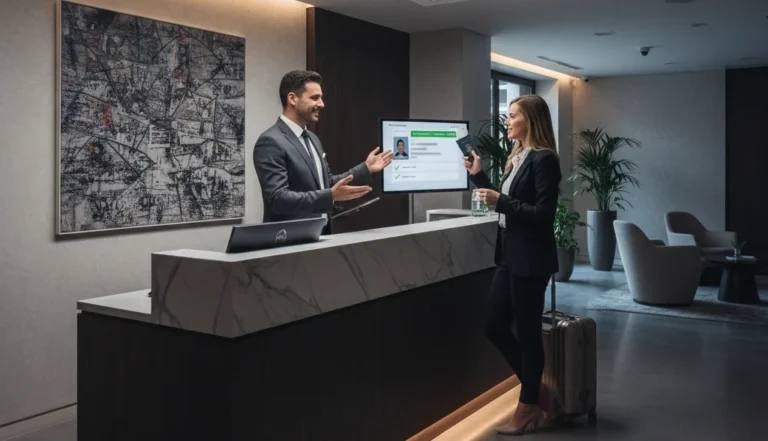
To truly reduce costs, one must stop acting as a consumer and start acting as a partner. Professional planners know that boutique properties rely on high-margin, direct bookings to survive. By bypassing the intermediaries—the Online Travel Agencies (OTAs)—you are not just saving the property the 15% to 25% commission they would otherwise pay; you are demonstrating professional intent. This alignment of interests creates the leverage required to negotiate favorable terms. The goal is to provide the property with a predictable, high-value, and low-friction booking, in exchange for a rate structure that reflects that lower operational risk.
Deep Contextual Background
The historical trajectory of boutique lodging was originally built upon the concept of the “unique narrative.” Properties were created by visionaries who prioritized design, location, and local identity over standardized amenity sets. In the early era, these properties were often prohibitively expensive because they lacked the efficiency of scale. However, the rise of the digital nomad, the “bleisure” traveler, and the boutique-corporate retreat has forced the industry to mature.
We are now in a phase of market saturation. There are thousands of properties claiming to be “boutique,” but many are merely rebranded mid-tier hotels with updated interior design. This market fragmentation has created a paradox: the cost of booking boutique travel has increased due to the proliferation of digital middlemen, while the perceived value has decreased due to the dilution of the term. The systematic challenge for the buyer is to identify “authentic boutique” assets—those with genuine operational independence—and to engage them directly. The history of this market shows that the properties that succeed are the ones that maintain strong, direct relationships with their recurring clientele, rather than those that outsource their guest acquisition to global booking engines.
Conceptual Frameworks and Mental Models
To master the mechanics of How to reduce boutique travel costs requires the application of specific mental models that prioritize system-level efficiency over transactional savings:
-
The Total Landed Value (TLV) Model: Do not calculate costs based on the nightly rate. Calculate them based on the total spend required to make the trip functional. A lower nightly rate at a property that requires you to spend extra on external co-working space, private security, or transport is actually more expensive than a higher rate at a fully self-contained property.
-
The Procurement Leverage Model: Understand the property’s “break-even” occupancy. A property with 50 rooms has different financial pressures than one with 10. You must learn to speak the language of occupancy, not just the language of price.
-
The “Shoulder-Season” Arbitrage: Boutique properties often have aggressive pricing swings based on micro-seasons (e.g., a city hotel’s pricing based on local conference cycles). Aligning your travel with these invisible, asset-specific cycles provides deeper discounts than any public-facing promotion.
Key Categories or Variations
| Category | Typical Pricing Structure | Negotiation Leverage | Procurement Strategy |
| Owner-Operated | Highly Elastic | High | Direct relationship with owner/GM |
| Lifestyle Chainlet | Rigid/Corporate-lite | Moderate | Volume-based corporate rates |
| Historic/Adaptive | Seasonal/Volatile | High | Off-shoulder booking timing |
| Private Estate/Villa | Usage/Day-based | Variable | Long-term exclusivity contracts |
| Design-Minimalist | Fixed/Premium | Low | Non-negotiable value-adds |
Real-world decision logic dictates that when you attempt to reduce costs, you must match your strategy to the property’s operational maturity. An Owner-Operated property values consistency and reliability; they will trade price for the guarantee of a “good” guest who doesn’t strain their limited staff.
Detailed Real-World Scenarios
-
Scenario 1: The Corporate Offsite. A team requires 15 rooms for a week. The advertised rate is prohibitive. Decision Point: Instead of demanding a lower rate, offer a “fixed-schedule” booking that guarantees payment in advance and provides a simple, bulk-service catering menu. The reduction in operational uncertainty for the hotel allows them to drop the rate by 20%.
-
Scenario 2: The Extended Stay. A guest needs 21 days in a boutique city hotel. Decision Point: A standard search shows high daily rates. Strategy: Approach the property via email. Ask for a “monthly” or “extended-stay” rate that the website does not display. Because you are reducing the hotel’s turnover costs (cleaning, re-marketing, check-in friction), they can offer a rate that is 30% below the daily market.
-
Scenario 3: The Peak-Season Conflict. A major local event is driving prices up. Decision Point: Paying peak rates or moving to a low-quality hotel. Strategy: Utilize the “off-shoulder” property strategy. Identify properties that are 2-3 miles outside the “event zone” but share the same boutique DNA. You retain the quality but shed the geographic premium.
Planning, Cost, and Resource Dynamics
The economic management of boutique assets requires a shift toward efficiency. When you master How to reduce boutique travel costs, the nightly room rate becomes merely one variable in a broader equation.
| Cost Component | Impact on “Real” Price | Mitigation Strategy |
| OTA Commissions | High (Embedded) | Direct booking; use sites only for intel |
| Service Friction | Moderate | Pre-arrival planning (avoid last-minute needs) |
| Opportunity Cost | High | Value lost if the environment isn’t productive |
| Operational Slack | Moderate | Build in “buffer time” to avoid service premiums |
Planners must treat the asset as a platform. The goal is not just to reduce the cost of the room, but to maximize the utility of the stay relative to the price paid.
Tools, Strategies, and Support Systems
-
The “Direct-Contact” Protocol: The successful deployment of How to reduce boutique travel costs depends on identifying the Revenue Manager or Sales Director. These individuals have the authority to override system pricing.
-
The “Blanket” Rate Agreement: If you are a recurring traveler, propose a “Standard Annual Rate.” This eliminates the need to renegotiate every trip and provides the hotel with predictable cash flow.
-
CRM for Travel: Maintain a simple database of your interactions with boutique properties. Record when they were willing to negotiate and which seasons were best for pricing.
-
Network Redundancy: Instead of paying for hotel “business services,” build your own (mobile hotspots, etc.). Relying on a boutique hotel’s internal infrastructure for high-stakes work is a hidden cost waiting to happen.
-
The “Pre-Negotiation” Audit: Never negotiate until you have a specific date and duration. Empty inquiries are ignored. Specific, actionable booking requests get responses.
Risk Landscape and Failure Modes
Risk in the boutique sector is idiosyncratic. A failure in the execution of How to reduce boutique travel costs often stems from confusing “cheap” with “efficient.”
-
The “Quality Drift” Trap: If you negotiate a price too aggressively, the hotel may assign you the worst room in the building—the one next to the elevator or the ice machine. Always negotiate for value, not just for the lowest number.
-
The “Service Denial”: When you are on a “negotiated rate,” some properties may deprioritize your requests (e.g., housekeeping, late check-out). Ensure that your agreement specifies that the service level remains identical to the public rate.
-
The “Phantom Inventory” Risk: Negotiating outside the booking system carries the risk that your reservation is lost in the hotel’s manual records. Always require a formal, digital confirmation.
-
The Data Privacy Risk: Boutique properties often lack enterprise-grade cybersecurity. When paying directly via wire transfer or over the phone, ensure the payment path is secure.
Governance, Maintenance, and Long-Term Adaptation
Treat your collection of preferred assets as a portfolio, not a series of one-off decisions. An essential component of How to reduce boutique travel costs is the audit of your travel history.
-
The Asset Performance Ledger: Maintain a record of every boutique asset utilized. Document the rate paid versus the value received.
-
The Quarterly Audit: Re-evaluate your list of potential assets. A property that was excellent two years ago may have suffered from maintenance neglect or management changes, necessitating a change in strategy.
-
Layered Checklist:
-
Physical: Infrastructure, sound, light, ergonomic potential.
-
Operational: Service reliability, staff responsiveness, security.
-
Strategic: Price-to-Value alignment.
-
Measurement, Tracking, and Evaluation
Evaluation must move beyond subjective sentiment. Rely on empirical performance indicators to determine if an asset is worth retaining in your portfolio.
-
Leading Indicators: The responsiveness and technical accuracy of the management during the procurement phase. A team that struggles to negotiate professionally will struggle to deliver a professional stay.
-
Lagging Indicators: The “Operational Variance”—the delta between the planned itinerary and the actual execution, caused by site-specific failures.
-
Qualitative Signals: Observe how staff react to non-standard requests. Do they solve the problem, or do they refer you to a policy manual? The latter is a sign of a “tourist-first” operation, which usually has less flexibility in pricing.
-
Documentation Example: The “Asset Utility Audit”—a post-stay document that ranks the property on specific metrics like acoustic isolation, network stability, and service autonomy, cross-referenced with the final price paid.
Common Misconceptions and Oversimplifications
-
Myth: “Last-minute booking is cheaper.” Correction: This applies to airlines, not boutique hotels. Boutique hotels value certainty (the ability to fill their inventory weeks in advance). Last-minute bookings are often priced at a premium for the disruption they cause to the operations team.
-
Myth: “Online reviews are a reliable indicator of booking value.” Correction: Reviews are often biased toward leisure travelers. A property that is great for a weekend couple’s trip can be a disaster for a team of executives.
-
Myth: “The owner is always present to fix things.” Correction: The owner is often the person creating the friction by being too involved in the micromanagement of the guest experience.
-
Myth: “I can use a travel agent to get a cheaper rate.” Correction: Travel agents get access, not necessarily lower prices.
Ethical and Contextual Considerations
The selection of boutique assets carries an inherent ethical responsibility. Many such properties are located in gentrifying neighborhoods or fragile ecosystems. When evaluating the viability of the How to reduce boutique travel costs strategy, consider the property’s relationship with its local community. Does the boutique operation support local labor, or does it import staff while displacing residents? Selecting assets that demonstrate a genuine commitment to their location is a form of risk mitigation; properties that alienate their local ecosystem eventually become isolated and operationally brittle.
Conclusion
The pursuit of efficiency in boutique travel is fundamentally an exercise in operational strategy, not in discount hunting. By approaching the process to find the ultimate metric for How to reduce boutique travel costs with the rigor of a project manager rather than a vacation planner, organizations and individuals can secure environments that do more than house a stay—they provide a competitive advantage. Excellence in this domain is found in the willingness to look beneath the surface, the skepticism required to challenge the aesthetic veneer, and the intellectual honesty to prioritize function over form. A truly successful stay is one where the environment becomes an invisible, yet powerful, facilitator of the objective at hand. The asset is merely the substrate; the plan is the foundation.