Common boutique stay mistakes: A Senior Editorial Audit of Operational Risks
The contemporary travel market operates under a persistent, and frequently damaging, assumption: that “boutique” hospitality is inherently superior to the standardized, large-scale luxury model. This belief is a byproduct of marketing. Independent hotels, often defined by their aesthetic curation and “intimate” service, are sold as the antidote to the corporate, sterile environment of global hotel chains. However, for the experienced planner or the high-frequency traveler, this binary comparison is dangerously incomplete. It ignores the reality that large-scale operations are optimized for reliability and redundancy, whereas boutique properties, by their very nature, are optimized for individuality—often at the expense of operational stability.
One of the most Common boutique stay mistakes is the failure to recognize that a boutique property is a unique business entity, not a node in a vast, standardized network. When a chain hotel faces a staffing crisis or a structural failure, it possesses the resources and the redundancy to absorb the shock. An independent boutique property, conversely, is often a single point of failure. It lacks the institutional depth to manage the unexpected. Travelers who approach these assets without a rigorous procurement framework are not merely risking a mediocre stay; they are courting systemic failure. This article serves as a formal audit of the operational gaps and cognitive biases that consistently derail the boutique experience.
Common boutique stay mistakes
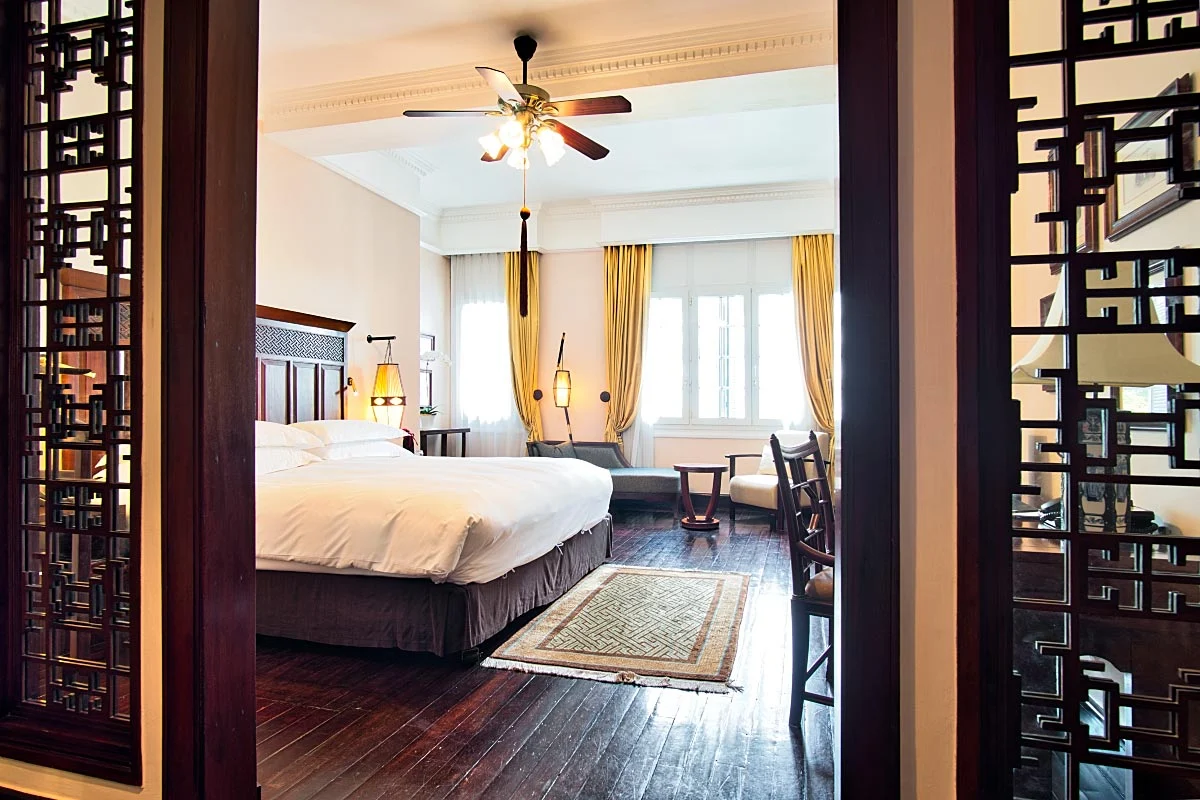
The categorization of Common boutique stay mistakes is not merely a list of logistical errors; it is a taxonomy of expectation mismanagement. The primary error lies in the confusion of “aesthetic intent” with “operational capability.” Travelers repeatedly assume that a property’s interior design is a proxy for its logistical competence. If a lobby is masterfully curated, the mind intuitively assigns that same level of mastery to the Wi-Fi architecture, the housekeeping protocol, and the front-desk responsiveness. This is an heuristic failure. The aesthetic is the product; the operations are the process. In the boutique sector, these two elements are frequently decoupled, and it is in the gap between them that most failures occur.
A secondary failure mode is the “intimacy fallacy.” Guests often mistake the limited staff presence for a high-touch, personalized service model. In reality, this limitation is often a budgetary constraint. The “boutique” charm can evaporate the moment a specific request—a late check-out, a specialized business service, a technical troubleshooting need—strains the property’s limited administrative capacity. Navigating Common boutique stay mistakes requires the recognition that you are not purchasing a standardized service level; you are purchasing a specific, localized, and often brittle set of capabilities. If your requirements fall outside the narrow operational focus of that specific property, the experience will degrade rapidly.
Deep Contextual Background
The evolution of the boutique hotel sector traces back to the 1980s, emerging as a reaction against the homogeneity of the “Grand Hotel” era. It was a movement of rebellion. The intent was to reclaim hospitality as an art form rather than a utility. For a period, this worked, fueled by visionary owners who managed their assets with obsessive, granular control. However, the market has matured, and the term “boutique” has been effectively commodified. Today, the sector is fragmented between “legacy” independent properties and “lifestyle” properties managed by large conglomerates but branded to appear independent.
This fragmentation has created a systemic risk. The traveler is often unable to distinguish between a property that is genuinely boutique—owned, managed, and curated by a dedicated, local team—and a property that is merely using a “boutique” wrapper to justify higher rates with lower operational overhead. We are currently witnessing a cycle of “aesthetic inflation,” where property owners invest heavily in visual presentation to drive social media visibility, while neglecting the “invisible” infrastructure: plumbing, acoustic isolation, and cyber-security. This disparity is the root cause of many contemporary travel failures.
Conceptual Frameworks and Mental Models
To impose professional discipline on the selection process, planners should utilize these frameworks:
-
The Aesthetic-Functional Gap: Map the property’s visual promise against its operational reality. If the property focuses heavily on design, search for “negative” reviews that mention maintenance, noise, or staffing.
-
The Scale-Capability Matrix: Assess whether the property’s size aligns with your needs. A 20-room property cannot handle the same volume of logistical requests as a 200-room property. It is not an error for them to say “no”; it is an error for you to ask.
-
The “Invisible” Infrastructure Audit: Before committing, identify the property’s reliance on third-party systems. Does the property have a dedicated, on-site engineer? Or is everything contracted out? The latter is a high-risk model.
Successfully navigating Common boutique stay mistakes requires the application of these frameworks to filter out assets that prioritize form over function.
Key Categories or Variations
These variations highlight that the mistakes are often structural, not just behavioral. When assessing your travel plan, categorize your risks to prevent the compounding of Common boutique stay mistakes into a single, failed trip.
Detailed Real-World Scenarios
-
Scenario 1: The Acoustic Failure. A traveler books a “Suite” in a beautiful, historic boutique hotel. Upon arrival, they realize the suite faces a busy thoroughfare or shares a wall with the communal breakfast area. Failure Mode: Failure to inspect the room location relative to the property’s public areas. Second-Order Effect: The property is unusable for work or rest.
-
Scenario 2: The Service Bottleneck. A team of three requires specialized meeting space. The boutique hotel lists “meeting facilities,” but they turn out to be a shared lobby table. Failure Mode: Relying on marketing copy instead of requesting a floor plan or photographs of the actual facility. Second-Order Effect: Complete loss of productivity for the trip.
-
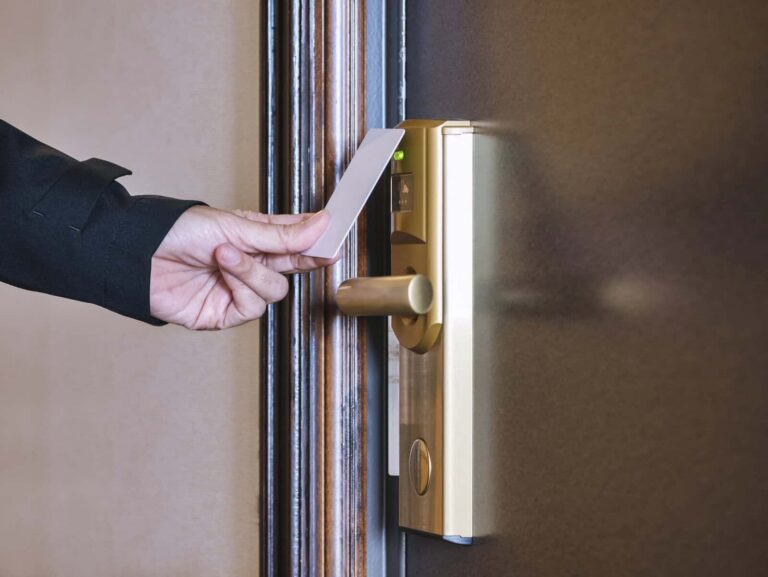
Scenario 3: The “Digital-Only” Collapse. A guest arrives after hours at a property that uses keyless, app-based entry. The app fails to sync. Failure Mode: Assuming “convenience” tech is more reliable than human staff. Second-Order Effect: Total lockout until an off-site manager can be contacted.
Planning, Cost, and Resource Dynamics
The management of boutique assets requires a shift toward “Total Landed Value” (TLV) analysis.
When looking at the economics of the trip, do not ignore the cost of “fixing” a bad property. It is often cheaper to book a slightly more expensive, reliable property than to deal with the fallout of a lower-cost, high-risk boutique asset.
Tools, Strategies, and Support Systems
-
The Floor Plan Request: If you are booking for professional reasons, demand a floor plan of your specific room. This is a critical step in avoiding Common boutique stay mistakes.
-
The “Pre-Flight” Email: Send a detailed inquiry to the general manager 72 hours before arrival. Their response—or lack thereof—is the ultimate indicator of operational maturity.
-
Local “Fixer” Networks: For high-stakes stays, identify a local concierge or professional who can act as a bridge if the property fails to deliver.
-
The Tech-Load Audit: For business travel, never assume the hotel Wi-Fi is sufficient. Carry independent connectivity.
-
Direct-Booking Protocol: Always book directly. It provides a direct line of communication and removes the “middleman” layer that complicates issue resolution.
Risk Landscape and Failure Modes
Risk in the boutique sector is idiosyncratic. A large hotel chain has a corporate standard. A boutique asset has an “owner’s standard,” which is subject to the owner’s temperament, financial health, and management capability.
-
Management Drift: Boutique properties frequently experience high management turnover. The property you audited six months ago may be under new, less capable leadership today.
-
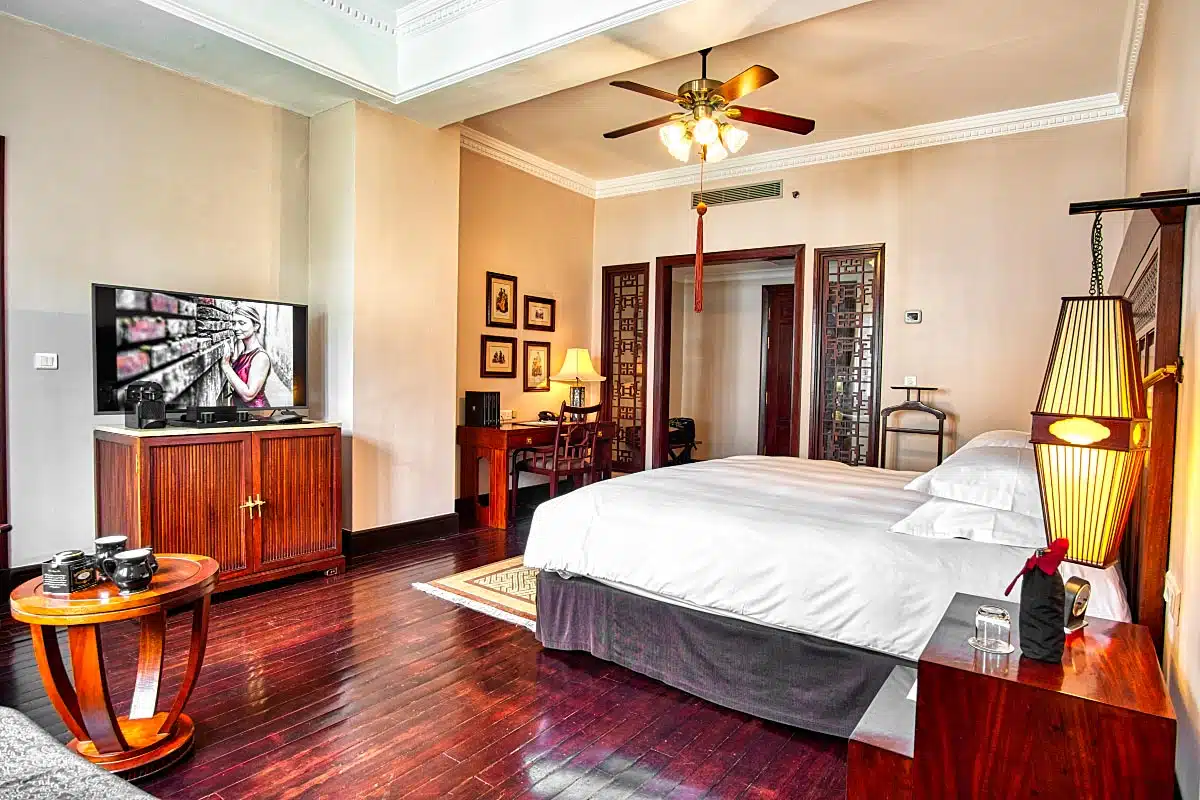
The “Design-Over-Function” Trap: Dim lighting, lack of power outlets, and uncomfortable furniture are standard features in “design-forward” hotels. They prioritize the look of the room over the workability of the space.
-
Staff Turnover: Small properties are highly dependent on the “gatekeeper”—the GM or lead concierge. If they leave, the service quality often collapses.
-
Data Security: Boutique properties often lack enterprise-grade cybersecurity. For sensitive professional travel, assume the network is compromised and utilize a VPN.
Governance, Maintenance, and Long-Term Adaptation
Treat your collection of preferred assets as a portfolio. A formal methodology for auditing the Common boutique stay mistakes should include a periodic review of your preferred assets.
-
The Asset Performance Ledger: Maintain a record of every boutique asset utilized. Document not just if it was “nice,” but if it was functional for the specific goal.
-
The Quarterly Audit: Re-evaluate your list of potential assets. A property that was excellent two years ago may have suffered from maintenance neglect or management changes.
-
Layered Checklist:
-
Physical: Infrastructure, sound, light, ergonomic potential.
-
Operational: Service reliability, staff responsiveness, security.
-
Strategic: Privacy, environmental control, brand alignment.
-
Measurement, Tracking, and Evaluation
Evaluation must move beyond subjective sentiment. Rely on empirical performance indicators to determine if an asset is worth retaining in your portfolio.
-
Leading Indicators: The responsiveness and technical accuracy of the management during the procurement phase. A team that struggles to answer logistical questions will struggle to solve logistical problems during the stay.
-
Lagging Indicators: The “Operational Variance”—the delta between the planned itinerary and the actual execution, caused by site-specific failures.
-
Qualitative Signals: Observe how staff react to non-standard requests. Do they solve the problem, or do they refer you to a policy manual? The latter is a sign of a “tourist-first” operation, not an intimate, guest-first asset.
-
Documentation Example: The “Asset Utility Audit”—a post-stay document that ranks the property on specific metrics like acoustic isolation, network stability, and service autonomy.
Common Misconceptions and Oversimplifications
-
Myth: “Small properties are more personal.” Correction: They are often more limited. Personalization is only valuable if the base operation is robust.
-
Myth: “Design is an indicator of quality.” Correction: Design is often a distraction from operational inadequacy.
-
Myth: “I can rely on online reviews.” Correction: Reviews are often biased toward leisure travelers. A property that is great for a weekend couple’s trip can be a disaster for a team of professionals.
-
Myth: “The owner is always present to fix things.” Correction: The owner is often the person creating the friction by being too involved in the micromanagement of the guest experience.
Ethical and Contextual Considerations
The selection of boutique assets carries an inherent ethical responsibility. Many such properties are located in gentrifying neighborhoods or fragile ecosystems. When evaluating the viability of an asset, consider the property’s relationship with its local community. Does the boutique operation support local labor, or does it import staff while displacing residents? Selecting assets that demonstrate a genuine commitment to their location is a form of risk mitigation; properties that alienate their local ecosystem eventually become isolated and operationally brittle.
Conclusion
The pursuit of the right boutique asset is fundamentally an exercise in operational strategy, not interior design. By approaching the process of identifying and preventing Common boutique stay mistakes with the rigor of a project manager rather than a vacation planner, organizations and individuals can secure environments that do more than house a stay—they provide a competitive advantage. Excellence in this domain is found in the willingness to look beneath the surface, the skepticism required to challenge the aesthetic veneer, and the intellectual honesty to prioritize function over form. A truly successful stay is one where the environment becomes an invisible, yet powerful, facilitator of the objective at hand. The asset is merely the substrate; the plan is the foundation.