Chic boutique destinations usa: An Operational Audit of High-End Travel Asse
The contemporary American travel market has undergone a fundamental shift, moving away from the era of standardized, corporate-led hospitality toward a model of decentralized, experience-driven lodging. This transition is not merely cosmetic. It reflects a deeper change in how professionals, creative workers, and high-net-worth individuals allocate their time and capital. The assumption that a standard, franchised luxury property provides the highest return on investment—whether that investment is measured in productivity, rest, or cultural exposure—has been dismantled. In its place, the concept of the “boutique destination” has emerged as a high-value asset category, defined by architectural specificity and localized narrative.
However, the proliferation of the term “boutique” in marketing collateral has created a signal-to-noise problem. When a location is marketed as “chic,” the label often obscures a lack of underlying operational maturity. The traveler is frequently sold an aesthetic, not an environment. To engage with chic boutique destinations usa effectively, one must treat the destination as an ecosystem rather than a collection of amenities. A destination is successful only when its physical, cultural, and logistical infrastructure supports the traveler’s core intent. Failure to distinguish between an “aesthetic bubble” and a “functional ecosystem” is the primary cause of professional travel failure.
Understanding Chic boutique destinations usa
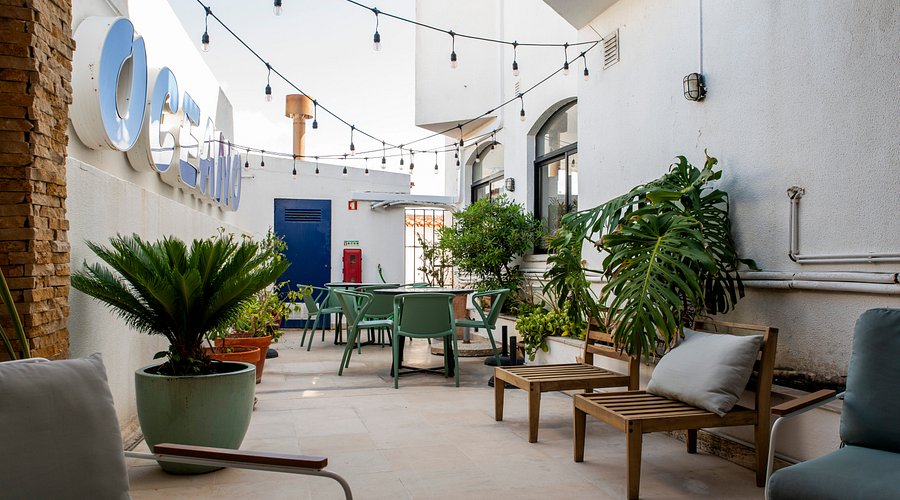
The categorization of chic boutique destinations usa is frequently misunderstood, often reduced to a shallow analysis of interior design trends or social media popularity. This perspective is dangerous for the serious planner. A “chic” destination is not one that merely adheres to the latest design zeitgeist; it is one that exhibits a sophisticated synthesis of architectural design, local cultural integration, and operational resilience. When we interrogate the term “boutique,” we are looking for properties and towns that exhibit “idiosyncratic excellence”—an operational maturity that defies the standardization of global chains.
The risk of oversimplification is high. Travelers assume that because a town or a hotel is “boutique,” it is inherently more personalized and attentive. This is a cognitive error. Boutique properties, by definition, lack the vast, redundant resource pools of large hotel chains. They operate with thin margins, small staffs, and single points of failure. Understanding these destinations requires a shift in mindset from “consumer” to “assessor.” You are not just booking a room; you are evaluating a fragile operational platform. The “chic” nature of the experience is not just about the linens or the lighting; it is about how well the destination facilitates your specific objective—be it deep-focus work, recuperation, or cultural immersion—without imposing unnecessary friction.
Deep Contextual Background
The evolution of the American boutique destination traces back to the reaction against the interstate highway sprawl of the mid-20th century. During the 1950s and 60s, American hospitality was defined by homogeneity. The roadside motel and the standardized luxury tower were designed for safety and predictability. The “boutique” movement of the late 20th and early 21st centuries was an intellectual and aesthetic rebellion against this sterility. Visionaries sought to reclaim hospitality as a form of cultural stewardship, utilizing adaptive reuse to turn forgotten warehouses, desert compounds, and historic coastal towns into experiential hubs.
We have now entered a phase of maturity. The most successful chic boutique destinations usa are no longer run by solitary owners but by sophisticated management groups that apply disciplined operational standards to the boutique aesthetic. This professionalization has improved reliability but has also introduced a new set of risks. We are seeing a stratification between “authentic independent” locales—which maintain strong ties to local narrative—and “lifestyle chainlets,” which apply a boutique veneer to standardized corporate service models. Recognizing the difference between these two archetypes is critical for any long-term planning, as the operational realities are diametrically opposed.
Conceptual Frameworks and Mental Models
To master the identification of high-quality destinations, apply these frameworks:
-
The Ecosystem Integration Index: How deeply is the destination tied to its environment? A destination that functions as an island, disconnected from its surroundings, will inevitably suffer from operational fragility. The best destinations act as conduits to their geography.
-
The Operational Friction Coefficient: Every destination imposes a cost in terms of cognitive load. Does the destination require you to manage its failures (e.g., poor Wi-Fi, complex check-in, logistical isolation), or is the environment designed to absorb those failures?
-
The Asset Utility Matrix: Map the destination’s attributes against your primary goal. A coastal town known for nightlife is not a “chic boutique destination” for a team requiring a silent, high-focus work retreat. The destination’s “chic” factor is irrelevant if it is functionally misaligned.
Key Categories or Variations
Decision logic should be driven by the “Intent-Asset Alignment.” Do not select a destination because it is currently “trending” in architectural media. Select it because the physical constraints of the location match the requirements of your project or stay.
Detailed Real-World Scenarios
-
Scenario 1: The Corporate Offsite. A team of twelve requires a setting for high-intensity strategic planning. Decision: Prioritize destinations with “hard” infrastructure (high-speed data, soundproof meeting space) over “soft” aesthetic appeal. Constraint: Avoid destinations where the primary communal space is a high-traffic lobby bar. Failure Mode: Booking an aesthetic-forward property that lacks the bandwidth to support ten concurrent users.
-
Scenario 2: The Architectural Research Trip. An individual visits a region to study vernacular design. Decision: Prioritize destinations that are themselves the subject of study. Constraint: The destination must be free of “themed” reproductions. Failure Mode: A “chic” hotel that is actually a modern shell with cheap, reproduction decor.
-
Scenario 3: The Extended-Stay Sabbatical. A consultant needs a month in a specific, culturally rich area. Decision: Shift focus from “boutique hotels” to “serviced local estates.” Constraint: The asset must have an on-site kitchen and laundry facility. Failure Mode: Assuming a boutique hotel can support a 30-day residency without massive cost inflation.
When evaluating chic boutique destinations usa travelers might frequent, these scenarios illustrate that the “chic” quality of the location often matters less than the operational alignment of the asset.
Planning, Cost, and Resource Dynamics
The economic management of travel to boutique locales requires a shift toward “Total Landed Value” (TLV).
When analyzing the price, do not ignore the cost of “fixing” a bad destination. It is often cheaper to pay a premium for a reliable property than to deal with the fallout of a lower-cost, high-risk boutique asset.
Tools, Strategies, and Support Systems
-
The Direct-Inquiry Protocol: Bypass the booking engine for complex stays. Email the management. The quality and specificity of their response is the most reliable leading indicator of the destination’s operational maturity.
-
The “Facility Audit”: Before finalizing, request the destination’s site map. Understand the layout. Does your lodging share a wall with the service entrance? Is it next to the pool? Physical layout determines the quality of the stay.
-
Local “Fixer” Relationships: For cities with high boutique density, cultivate a relationship with a local concierge or professional network. They have insights into which properties are currently “hot” (high visibility) versus which are “operational” (high reliability).
-
Tech-Load Management: Never assume the destination’s internal internet is sufficient for professional use. Carry redundant connectivity.
-
Payment Hygiene: Ensure all contracts are handled via secure, institutional banking channels. Boutique resorts occasionally utilize insecure, third-party payment processors.
Risk Landscape and Failure Modes
Risk in the boutique destination sector is idiosyncratic. A property that is excellent in June may be operationally crippled by September due to staff turnover or the loss of a key vendor.
-
Management Drift: Boutique properties are highly dependent on the “gatekeeper”—the GM or lead owner. If that person changes, the entire operational culture can disintegrate.
-
The “Instagram” Trap: High-quality photography often hides physical neglect. If the destination’s social media is the only source of visual data, proceed with extreme caution.
-
Supply Chain Fragility: Remote destinations often suffer from “logistical isolation.” If the area relies on a single road or utility line, a minor local disruption leads to systemic failure.
-
Data Security: Boutique assets frequently lack enterprise-grade cybersecurity. Assume the network is insecure and protect all sensitive data accordingly.
Governance, Maintenance, and Long-Term Adaptation
Treat your collection of preferred assets as a portfolio. A formal methodology for auditing chic boutique destinations usa should include a periodic review.
-
The Asset Performance Ledger: Maintain a record of every destination utilized. Document not just if it was “nice,” but if it was functional for the objective.
-
The Quarterly Audit: Re-evaluate your list of potential assets. A destination that was excellent two years ago may have suffered from maintenance neglect or management changes.
-
Layered Checklist:
-
Physical: Infrastructure, sound, light, ergonomic potential.
-
Operational: Service reliability, staff responsiveness, security.
-
Strategic: Privacy, environmental control, brand alignment.
-
Measurement, Tracking, and Evaluation
Evaluation must move beyond subjective sentiment. Rely on empirical performance indicators to determine if a destination is worth retaining in your portfolio.
-
Leading Indicators: The responsiveness and technical accuracy of the management during the procurement phase. A team that struggles to negotiate professionally will struggle to deliver a professional stay.
-
Lagging Indicators: The “Operational Variance”—the delta between the planned itinerary and the actual execution, caused by site-specific failures (e.g., unexpected fees at checkout, room discrepancies).
-
Qualitative Signals: Observe how staff react to non-standard requests. Do they solve the problem, or do they refer you to a policy manual? The latter is a sign of a “tourist-first” operation, not an intimate, guest-first asset.
-
Documentation Example: The “Asset Utility Audit”—a post-stay document that ranks the property on specific metrics like acoustic isolation, network stability, and service autonomy.
Common Misconceptions and Oversimplifications
-
Myth: “Boutique means personalized.” Correction: It often means “resource-constrained.” Personalization is only valuable if the base operation is robust.
-
Myth: “Design is an indicator of quality.” Correction: Design is often a distraction from operational inadequacy.
-
Myth: “I can rely on online reviews.” Correction: Reviews are often biased toward leisure travelers. A property that is great for a weekend couple’s trip can be a disaster for a team of professionals.
-
Myth: “The owner is always present.” Correction: The owner is often the person creating the friction by being too involved in the micromanagement of the guest experience.
Ethical and Contextual Considerations
The selection of boutique destinations carries an inherent ethical responsibility. Many such locations are located in fragile ecosystems or gentrifying neighborhoods. When evaluating the viability of a destination, consider its relationship with its local community. Does the boutique operation support local labor, or does it import staff while displacing residents? Selecting assets that demonstrate a genuine commitment to their location is a form of risk mitigation; destinations that alienate their local ecosystem eventually become isolated and operationally brittle.
Conclusion
The pursuit of chic boutique destinations usa travelers might frequent is fundamentally an exercise in operational strategy, not interior design. By approaching the process with the rigor of a project manager rather than a vacation planner, organizations and individuals can secure environments that do more than house a stay—they provide a competitive advantage. Excellence in this domain is found in the willingness to look beneath the surface, the skepticism required to challenge the aesthetic veneer, and the intellectual honesty to prioritize function over form. A truly successful stay is one where the environment becomes an invisible, yet powerful, facilitator of the objective at hand. The asset is merely the substrate; the plan is the foundation.