
How to manage check-in processes: A Senior Editorial Audit
The check-in process is rarely perceived as a strategic asset. In most operational environments—hospitals, luxury hotels, corporate headquarters, or large-scale conferences—it is viewed as a necessary logistical tax: a queue that must be processed, a form that must be filed, a barrier that must be navigated before the “real” value of the service can be delivered. This perspective is a fundamental failure of systems design. The check-in is, in reality, a high-stakes information exchange. It is the moment where identity, intent, and eligibility are synthesized, establishing the parameters for the entire subsequent interaction.
When the gateway fails, the cost is not merely a few minutes of lost time. It is a compounding degradation of the user experience, a surge in administrative overhead, and the introduction of security vulnerabilities. A poorly optimized entry point creates a “chokepoint” that ripples through the entire organization, reducing output and eroding the credibility of the service provider. Whether managing the flow of patients into an emergency department or guests into a boutique resort, the architecture of the check-in is the architecture of trust. It is the point where the organization’s promises collide with its operational reality.
Understanding “How to manage check-in processes”
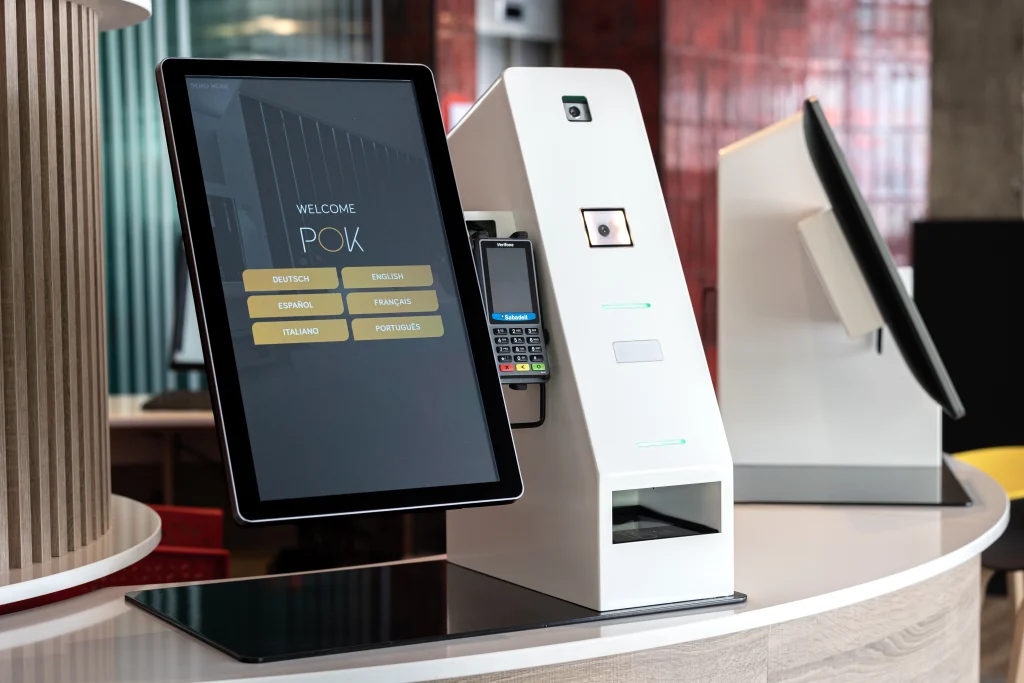
The inquiry into How to manage check-in processes is frequently simplified into a discussion about software selection or lobby layout. While these elements are important, they are downstream of the foundational logic. To truly understand the process, one must strip away the veneer of “customer service” and examine the mechanics of verification, data synchronization, and flow control. The primary misunderstanding is the belief that a check-in is a singular, static event. It is not. It is the culmination of pre-arrival signals, immediate identity validation, and post-entry resource provisioning.
Oversimplification risks are omnipresent in this field. Organizations often attempt to automate the entire flow, assuming that “contactless” equates to “frictionless.” In many high-security or high-complexity environments, this is false. The removal of human oversight can create a vacuum where verification failures go unnoticed until the user is already deep within the system, at which point the cost of remediation is exponential. Effective management requires a calibration between self-service autonomy and human-led intervention. It requires identifying which data points are critical for immediate verification and which can be deferred to a secondary engagement phase.
Deep Contextual Background
Historically, the check-in was a tactile, manual process. The ledger, the physical key cabinet, and the clipboard were the primary tools of record. This era relied on “institutional memory”—a staff member recognizing a face, remembering a preference, or manually vetting a physical credential. While this allowed for a high degree of personalization, it was fundamentally unscalable and prone to extreme variance in service quality. The shift toward digitization began as a quest for consistency rather than speed.
The advent of database-driven management systems in the 1990s and 2000s transformed the check-in from a physical task into a data-entry task. However, this introduced a new structural problem: the “Data Entry Bottleneck.” By forcing staff to become data clerks, organizations inadvertently increased the dwell time at the point of entry. We are currently in the third epoch of this evolution, characterized by “Interoperable Identity.” We no longer view the check-in as a moment where data is captured; we view it as a moment where pre-verified data is accessed, authenticated, and leveraged. The organizations that lead in this space have moved from capturing information to verifying it.
Conceptual Frameworks and Mental Models
To impose professional discipline on operational entry points, one must apply rigorous mental models. These frameworks move the analysis from the superficial to the structural:
-
The Information Asymmetry Gap: The provider knows the system; the guest knows only their need. The check-in must close this gap instantly. If the instructions are too complex, the provider is effectively punishing the user for engaging with the system.
-
The Verification Lifecycle: Every check-in is composed of three distinct phases: Validation (Is this person who they say they are?), Eligibility (Are they allowed to be here?), and Provisioning (Do they have what they need to enter?). Decoupling these phases allows for parallel processing.
-
Throughput vs. Fidelity: This is the central trade-off. High throughput (speed) often requires low fidelity (shallow verification). High fidelity (deep security/personalization) requires low throughput. Determining the optimal point on this curve is the core strategic challenge when learning how to manage check-in processes.
Key Categories or Variations
The variation in these categories is dictated by the consequence of error. In an event setting, an error results in a slow line. In a healthcare setting, an error can result in clinical catastrophe. Strategy must be inversely proportional to the cost of failure.
Detailed Real-World Scenarios
-
Scenario 1: The High-Volume Event Bottleneck. A 5,000-person conference is beginning. The check-in process fails because the physical scanners are synchronized to a slow central server. Decision Point: Implement offline-first verification and distributed printing stations. Failure Mode: Assuming cloud latency will not spike during peak load.
-
Scenario 2: The Secure Facility Entry. A guest arrives at a corporate HQ. The visitor management system crashes. Decision Point: A pre-printed fallback roster maintained on a secure, local drive. Second-Order Effect: The fallback process is slower, but it maintains the security baseline.
-
Scenario 3: The Healthcare Triage. A patient arrives at an ER. The patient is non-verbal. Decision Point: Shift immediately from identity verification to physical stabilization while capturing biometric identifiers for later reconciliation.
-
Scenario 4: The Boutique Hotel. A guest arrives at 2 AM. The system is down. Decision Point: Grant physical access based on confirmed booking records (printed), deferring the complex credit card re-authorization until morning.
Planning, Cost, and Resource Dynamics
The economic management of entry points is often miscalculated. Organizations focus on the cost of the software while ignoring the opportunity cost of the “wait time.”
When evaluating how to manage check-in processes, consider the total cost of ownership. A system that saves $10,000 in labor but adds two minutes to the average wait time is an economic net loss when measured against the lost time of the guests or staff.
Tools, Strategies, and Support Systems
-
API-First Verification: Do not build proprietary verification databases. Integrate with identity providers (OAuth, OIDC) that handle the heavy lifting of authentication.
-
Distributed Queue Management: Avoid the “snake line.” Use partitioned entry points where users are grouped by verification status (e.g., Pre-verified vs. Manual Intervention).
-
Hardware Redundancy: Always maintain “dumb” fallback options. If the smart reader fails, the human operator must have a paper-based or local-system override.
-
Asynchronous Data Loading: Allow users to upload credentials, photos, or documents hours before they arrive. The check-in should be an authorization step, not an input step.
-
Biometric Normalization: In high-security environments, standardize on a single biometric modality to reduce the “sensor training” time for the user.
-
Edge Computing: Perform the verification computation on the local machine or terminal, not the remote server. This eliminates the dependency on network stability at the moment of entry.
Risk Landscape and Failure Modes
Risk is not a monolith; it is a taxonomy. Failure modes in check-in systems typically fall into three buckets:
-
The Availability Failure: The system is “down.” The internet fails, the power cuts, or the database times out. This is a technical risk that requires offline redundancy.
-
The Integrity Failure: The system is “up,” but the data is wrong. Someone is checked in who shouldn’t be, or a valid guest is denied entry. This is a logic risk that requires manual override protocols.
-
The Bottleneck Failure: The system is perfectly functional, but it is physically incapable of processing the volume of people. This is a capacity risk that requires spatial reorganization and flow-rate planning.
Management of how to manage check-in processes requires designing against these specific failure modes. A system designed for Availability but not Capacity will fail when the crowd arrives.
Governance, Maintenance, and Long-Term Adaptation
A check-in system is a living entity. It requires a formal governance structure, particularly in organizations with high turnover or frequent changes in entry requirements.
-
Audit Cycles: Every quarter, perform a “Red Team” test. Have someone attempt to check in using expired, incorrect, or incomplete documentation. Observe how the staff and system react.
-
Adjustment Triggers: Define the metrics that force a change in the process. For example, “If average wait time exceeds 4 minutes, add a second partition to the queue.”
-
Documentation Taxonomy:
-
Standard Operating Procedure (SOP): The “how.”
-
Emergency Override Protocol: The “what if the system dies.”
-
Exception Handling Log: A living document of what went wrong, used to patch the SOP.
-
Measurement, Tracking, and Evaluation
Evaluation must move beyond “How did it feel?” to empirical performance indicators.
-
Leading Indicators: The “Preparation Rate”—what percentage of users have completed the pre-arrival requirements (e.g., digital forms, app downloads)? If this is low, the physical check-in will fail.
-
Lagging Indicators: “Mean Time to Admission” (MTTA). The literal time from arrival at the designated checkpoint to entry.
-
Qualitative Signals: Observe the staff’s body language. If the staff are constantly apologizing, the system is failing, regardless of the speed.
-
Documentation Example: The “Throughput Variance Report.” This document tracks the throughput during peak hours versus off-peak hours and identifies the specific point (e.g., ID scan, payment verification) where the flow slows down.
Common Misconceptions and Oversimplifications
-
Myth: “Automated kiosks solve the line problem.” Correction: Kiosks solve the “staffing” problem but often exacerbate the “throughput” problem because they are harder to navigate than a trained human.
-
Myth: “Data collection should be maximized during check-in.” Correction: Check-in should be the minimal data collection event. Defer non-essential profiling to post-check-in interactions.
-
Myth: “We can train staff to handle the rush.” Correction: Human performance is the most variable factor. Good systems minimize the need for staff brilliance by providing guardrails.
-
Myth: “All guests should be treated the same.” Correction: Stratified check-in paths (e.g., Fast Track vs. Regular) protect the capacity of the system.
Ethical and Contextual Considerations
The check-in is the first point of data surveillance. In many contexts, this raises significant ethical concerns. Collecting biometric data, tracking movement, or demanding excessive personal identifiers creates a permanent record of an individual’s presence. Organizations must weigh the operational benefit against the privacy cost. A “security first” mentality often leads to over-collection of data that becomes a liability in the event of a breach. Transparency regarding what data is collected, why it is necessary, and how long it is stored is not just an ethical imperative; it is a legal requirement in most modern jurisdictions.
Conclusion
The successful mastery of how to manage check-in processes is fundamentally about the elimination of chaos. It is the practice of imposing order on a chaotic moment of transition. Whether the process is digital, analog, or hybrid, the objective remains the same: to create a seamless transition from “outside” to “inside” that respects the dignity of the individual and the operational requirements of the institution. The process is not the barrier; it is the invitation.