Best Boutique Stays for Group Travel: A Strategic Operational Guide
Group travel is frequently mischaracterized as a leisure activity defined by shared experiences and social cohesion. Operationally, however, it is an exercise in resource management, logistical synchronization, and the mitigation of interpersonal friction. When a cohort of individuals moves from their disparate home environments into a singular, shared space, the pressure on that space—and the management team behind it—is immense. The traditional hotel model, characterized by isolated, uniform rooms, rarely addresses the needs of a group that requires both collective social infrastructure and individual autonomy.
The search for the Best boutique stays for group travel necessitates a departure from standard hospitality metrics. One cannot rely on aggregate star ratings or generic “family-friendly” tags. Instead, the task involves identifying assets that possess the correct “programmatic density”—properties where the shared spaces (kitchens, dining areas, lounge zones) are scaled to match the occupancy of the private rooms. Without this equilibrium, a property may accommodate the headcount, but it will fail the functional test, leading to overcrowding, service bottlenecks, and the inevitable degradation of the group’s intent.
This analysis provides a rigorous, analytical framework for evaluating group-oriented lodging. It is intended for planners, organizers, and high-frequency travelers who view the selection of a property as a foundational decision that dictates the success or failure of the entire endeavor. By dissecting the failure modes of common group-travel assets and establishing a clear taxonomy of property types, we can develop a methodology for securing environments that are not just habitable, but strategically optimized for collective use.
Understanding Best boutique stays for group travel
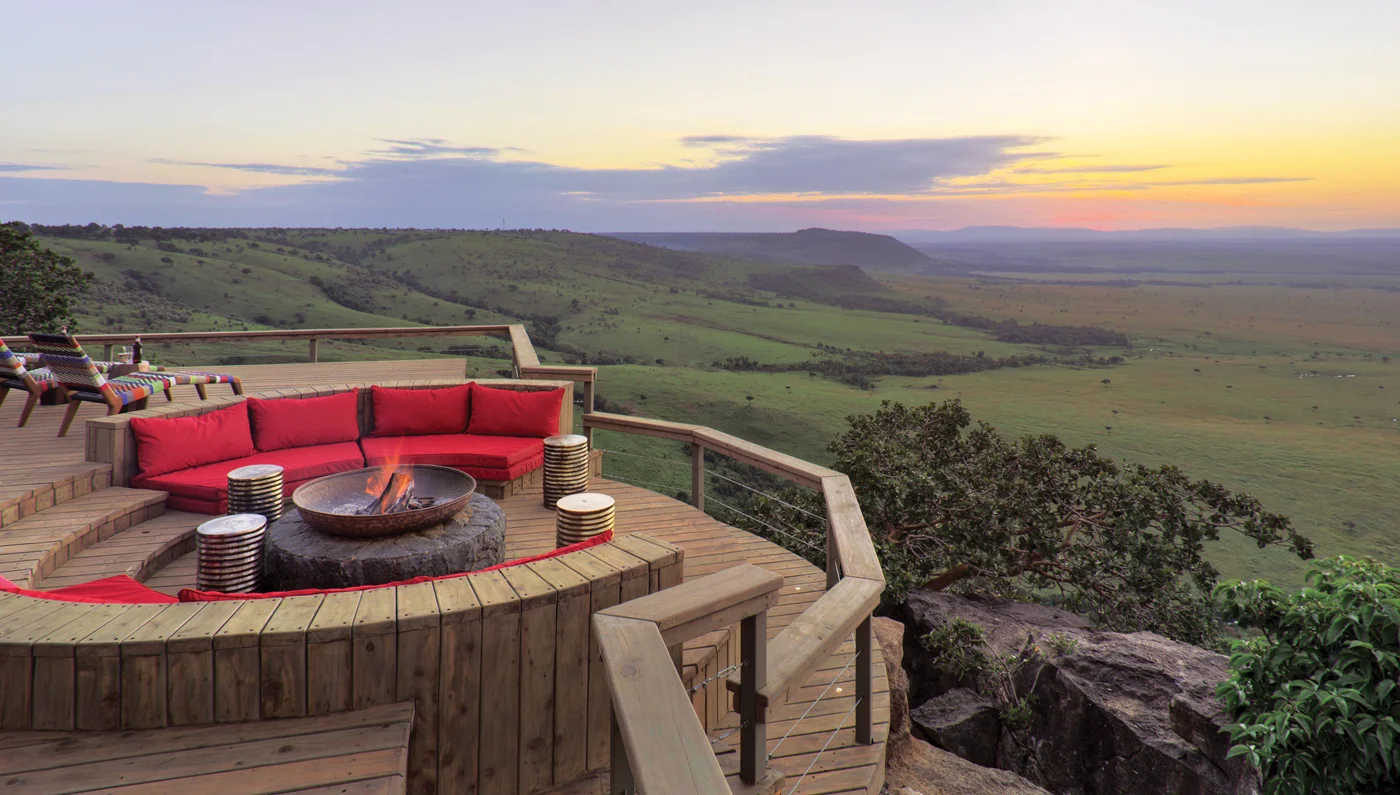
The fundamental challenge in identifying the Best boutique stays for group travel is the distinction between “capacity” and “utility.” A property may list fifteen beds, but if the communal table only seats six, or if the water heating system cannot manage fifteen concurrent showers, the property is functionally unfit for a group of fifteen. This is a recurring failure in the boutique sector, where owners often add sleeping inventory to properties without scaling the foundational infrastructure (HVAC, plumbing, kitchen, furniture) to compensate.
Common misunderstandings arise from the “Airbnb effect,” where residential properties are marketed as “estates” or “boutique lodges” without any underlying operational management. A true boutique stay for a group must offer a level of administrative support—concierge, maintenance, or housekeeping—that bridges the gap between a private residence and a hotel. Without this, the group becomes its own facility management team, absorbing the labor and stress of maintenance that should be provided by the host.
Oversimplification risks are high here. Planners often focus on the “aesthetic” (the decor, the view) while ignoring the “flow” (circulation, room placement, acoustic separation). If you seek the Best boutique stays for group travel, you must prioritize the geometry of the space over the visual output. A beautifully decorated, five-bedroom villa with paper-thin walls and one centralized bathroom is a catastrophe for a multi-family trip, regardless of the interior design quality. True optimization requires a cold, analytical look at how a group moves through the space.
Deep Contextual Background: The Evolution of Group Lodging
Historically, group travel was the domain of the “grand hotel”—massive structures with ballrooms, dining halls, and sprawling wings. These were designed for the collective. However, the rise of the specialized boutique movement in the late 20th century splintered this market. We moved from the “standardized wing” to the “curated estate.”
This shift was driven by a desire for intimacy and neighborhood integration. The market moved away from sterile conference hotels toward repurposed historic properties, vineyard estates, and urban townhouse clusters. While this has resulted in higher-quality aesthetic environments, it has also created a fragmentation in service. Small, independent owners rarely have the operational bandwidth to manage a 20-person group effectively. We are currently in a corrective phase where professional management companies are stepping in to wrap these boutique assets in enterprise-level service protocols, a model that is now becoming the standard for the most successful group-travel setups.
Conceptual Frameworks and Mental Models
To manage expectations and reduce exposure to failure, apply these frameworks:
-
The Communal-Private Equilibrium: Every successful group stay requires a balance between time spent together and time spent apart. Evaluate a property based on its ability to support both. Does the property have “breakout zones” (nooks, porches, gardens) for when the collective dynamic becomes exhausting? If the entire group is forced to interact in a single room, the equilibrium will fail.
-
The “Anchor-Space” Theory: The group’s success will center on one or two “anchor spaces.” Usually, this is the kitchen/dining area or the outdoor deck. If these spaces are cramped, poorly lit, or poorly equipped, the group will feel stifled. When researching the Best boutique stays for group travel, identify the primary anchor space and assess its capacity for your headcount.
-
The Infrastructure Latency Model: Groups are intense users of infrastructure. Assume the system is taxed. Will the Wi-Fi drop if 10 people use it? Will the hot water run out? If the property doesn’t explicitly market “commercial-grade” utilities, assume it is residential and plan for lower capacity.
Key Categories of Asset Types and Trade-offs
Classifying properties by their structural capability helps in narrowing the search field.
Realistic decision logic: Never select a “Villa/Compound” if the group includes people with competing expectations or varying budgets. This requires the “Estate Hotel” or a managed “Townhouse Cluster” to ensure there is a third-party buffer (the staff) between the group members.
Detailed Real-World Scenarios
Scenario 1: The Multi-Generational Estate Stay
A group of three generations (12 people total) books a remote boutique estate.
-
Constraint: Differing mobility levels and sleep schedules.
-
Failure Mode: Selecting a property where the only common area is on the ground floor and the master suites are on the third, with no elevator.
-
Second-Order Effect: The elderly guests are isolated, causing social friction and stress for the organizers.
-
The Lesson: Always audit the “accessibility-to-room-assignment” matrix before finalizing the booking.
Scenario 2: The Corporate Leadership Retreat
A firm of 8 executives books an urban townhouse.
-
Constraint: Need for private meeting space and stable connectivity.
-
Failure Mode: Choosing a “chic” rental that uses residential-grade Wi-Fi and has no dedicated meeting table.
-
Second-Order Effect: The retreat pivots from “strategic planning” to “troubleshooting connectivity,” and the objective is missed.
-
The Lesson: For corporate groups, functionality trumps aesthetic every time.
Scenario 3: The Friends’ Wedding Weekend
A group of 20 books a series of disconnected cottages.
-
Constraint: Desire for a unified “hub” and spontaneous social interaction.
-
Failure Mode: The “hub” (the primary house) is too small to accommodate the group for breakfast, making the others feel like outsiders.
-
The Lesson: The Best boutique stays for group travel are those that offer a singular communal heart, even if sleeping quarters are dispersed.
Planning, Cost, and Resource Dynamics
The economic management of group stays is distinct from individual travel. You are not just paying for a room; you are paying for the exclusive rights to a facility.
The cost of not hiring a coordinator or selecting a managed property is the loss of the organizer’s vacation time. Many planners fail to account for the “shadow labor” required to run an unmanaged boutique villa.
Tools, Strategies, and Support Systems
-
The “Group-Flow” Audit: Before booking, request a floor plan. Do not rely on photos. A floor plan shows if the kitchen is connected to the dining area. If they are separated by a hallway, the “group flow” will be broken.
-
The “Third-Party Validator”: In the search for the Best boutique stays for group travel, use travel agencies that specialize in private estates. They have “boots on the ground” data that public booking engines lack.
-
The “Pre-Arrival” Contract: If booking a private estate, explicitly negotiate the terms of maintenance. What happens if the dishwasher breaks on a Saturday? Who is the emergency contact?
-
Resource Loading: Treat the group like a project. Assign “lead” roles for key group functions—transportation, dining, and activity scheduling—to minimize the burden on the group leader.
Risk Landscape and Failure Modes
Group dynamics exacerbate property failures. A small leak in a solo trip is an annoyance; in a group trip, it’s a crisis.
-
Compounding Service Failure: When a service fails (e.g., the power goes out), the group’s collective anxiety amplifies the problem.
-
The “Free-Rider” Problem: In unmanaged boutique properties, one person often ends up doing 90% of the cleanup. This is a common and destructive failure mode that ruins the group cohesion.
-
Policy Misalignment: A property might have “no noise after 10 PM” policies that are incompatible with a group stay. This risk is often buried in the fine print.
Governance, Maintenance, and Long-Term Adaptation
To effectively manage group travel, one must adopt a formal governance system.
-
Audit Cycles: Every group travel season, review the performance of properties you have used. Create a “Permanent Do-Not-Book” list for properties that failed to meet logistical thresholds.
-
Adjustment Triggers: If a property requires more than two “manual interventions” (e.g., calling the manager, cleaning it yourself, fixing tech) during a trip, it should be removed from the “Preferred” list.
-
Layered Checklist for Group Vetting:
-
[ ] Are there enough bathrooms for peak-morning usage?
-
[ ] Does the dining capacity match the occupancy?
-
[ ] Is the acoustic separation sufficient for mixed sleep schedules?
-
Measurement, Tracking, and Evaluation
Evaluation must move beyond “Did we have fun?” to “Did the infrastructure support the objective?”
-
Leading Indicators: The responsiveness of the host to “logistical” questions (e.g., “Can your kitchen support a private chef for 15?”).
-
Lagging Indicators: The “Post-Trip Debrief”—a simple, honest conversation with the group about what worked and what didn’t.
-
Qualitative Signals: Observe the group’s mood on the second morning. If everyone is already feeling the “pinch” of space or logistics, the property is failing.
-
Documentation Example: The “Group Travel Ledger”—a simple document tracking the pros and cons of every property used. This is your most valuable asset for future planning.
Common Misconceptions and Oversimplifications
-
Myth: “Booking direct is always better.” Correction: For high-end groups, booking through an experienced travel advisor who has vetted the property is a form of risk insurance.
-
Myth: “Everyone wants to be together.” Correction: The best group trips provide moments of solitude. A property that forces proximity is an error.
-
Myth: “A big house is a boutique stay.” Correction: Size is not quality. A managed boutique estate is fundamentally different from a large, unmanaged Airbnb.
-
Myth: “We can manage the logistics ourselves.” Correction: If the group is larger than six, you cannot manage the logistics yourself without ruining your own experience. Hire help.
Ethical and Practical Considerations
There is an ethical dimension to group travel. Large groups have an outsized impact on local communities. When selecting the Best boutique stays for group travel, prioritize properties that are integrated into their locale and managed professionally. Avoid properties in residential zones where the influx of a large, changing group causes friction with neighbors. Being an “invisible” guest—someone who leaves no trace and respects local norms—is a requirement of responsible group travel. Furthermore, acknowledge that the “boutique” experience relies on staff. Tip well, communicate clearly, and treat the property staff as the partners they are in ensuring your trip’s success.
Conclusion
The pursuit of the right environment for a collective experience is an exercise in operational design. By prioritizing functional logistics over aesthetic appeal, and by understanding that the quality of the stay is dictated by the infrastructure’s ability to handle the group’s intensity, organizers can reclaim the group travel experience from the friction of poor planning. Identifying the Best boutique stays for group travel is not about luck; it is about rigorous, data-driven vetting. A successful stay is one where the property fades into the background, functioning so seamlessly that the group is free to focus on the objective—the connection, the celebration, or the collaboration—that brought them together in the first place. This is the hallmark of professional-grade travel planning: creating a foundation upon which a truly memorable experience can be built, rather than a structure that threatens to collapse under the weight of its own logistics.