Best Desert Boutique Hotels United States: A Strategic Asset Analysis
The desert environment is perhaps the most demanding host in the American landscape. Unlike temperate climates where the building functions as a filter for minor fluctuations in weather, the desert property must act as a fortified vessel—a regulator of extreme thermal gain, intense UV radiation, and severe water scarcity. When we discuss the hospitality assets within these zones, we are not merely talking about room decor or amenity packages. We are discussing the intersection of extreme engineering and human comfort.
The current market for independent lodging in the American West and Southwest has shifted significantly. There is a move away from the “resort-as-a-city” model—massive, sprawling complexes that consume vast quantities of water and electricity—toward the boutique model. These smaller, more surgically precise operations are attempting to harmonize with the land rather than dominate it. However, this shift creates a new set of challenges. Operating a high-end, boutique property in the desert requires a level of infrastructural sophistication that is often invisible to the guest but critical to the property’s long-term survival.
Identifying the quality of these assets requires a departure from standard hospitality grading. One cannot use the same metrics for a forest lodge that one uses for an arid-land estate. To truly evaluate the Best desert boutique hotels united states, one must look past the aesthetic trend and analyze the property as a managed system. This analysis serves as a comprehensive guide for developers, operators, and high-end travelers to understand the operational physics, environmental constraints, and strategic realities of the desert boutique sector.
Understanding “Best desert boutique hotels united states”
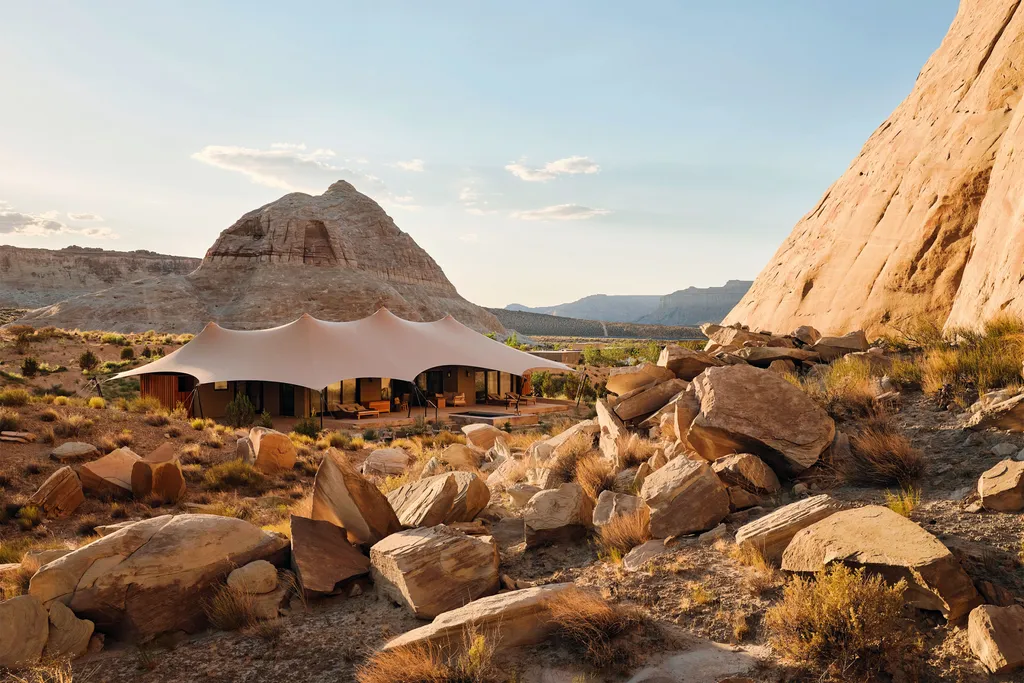
The categorization of the Best desert boutique hotels united states is plagued by marketing noise. The term “boutique” is frequently used to obfuscate a lack of structural investment, while “desert hotel” is often a label applied to any property within a three-hour drive of a canyon. To properly understand this sector, one must distinguish between “visual desert design” (which is easily replicated with paint, textiles, and succulents) and “environmental integration” (which is an expensive, rigorous, and difficult engineering feat).
A common misunderstanding is that desert architecture is inherently sustainable because it utilizes natural materials. While materials like rammed earth or adobe have historical validity, they require modern thermal and structural engineering to be viable for modern hospitality. A property that markets itself as a “boutique desert sanctuary” but relies on inefficient cooling systems or lacks proper greywater recycling is not a sanctuary; it is an ecological liability. The risk of oversimplification is high, as consumers often prioritize the “vibe”—the aesthetic of the desert—over the functional reality of living in it.
To identify the top-tier assets, one must look for the “invisibility of effort.” These are not merely decorative choices; they are the fundamental operations that allow the property to function without degrading its own environment. When searching for the Best desert boutique hotels united states, prioritize properties that demonstrate a rigorous approach to infrastructure over those that simply showcase a curated aesthetic.
Deep Contextual Background: The Evolution of Desert Hospitality
The evolution of the desert hotel in America is a study in the conflict between human desire for the exotic and the physical reality of the environment. In the early 20th century, the desert was viewed as a frontier—a place for exploration and, in some cases, convalescence for the infirm. The architecture reflected this through the use of wood and stone, mimicking temperate structures that were poorly suited to the climate.
The mid-century movement, centered largely around the Coachella Valley and parts of Arizona, marked the first real synthesis of modernism and the desert. Architects began to embrace the open plan, utilizing steel and glass to blur the line between indoor and outdoor. This was a revolutionary shift in hospitality, allowing the guest to “experience” the desert without having to endure its harshness. However, this style was also notoriously inefficient.
We are now in the third phase of this evolution: the “Regenerative Boutique” era. Today’s most successful properties are looking backward to indigenous techniques—thermal mass, shading, cross-ventilation—while moving forward with modern materials and energy management. The successful assets in this current market are those that recognize the desert not as a blank canvas, but as a rigid set of constraints. The Best desert boutique hotels united states are defined by their ability to translate these constraints into a luxury experience.
Conceptual Frameworks and Mental Models
To manage these properties effectively, one must employ specific frameworks that treat the hotel as a thermodynamic system.
-
The Thermal Inertia Model: This posits that the building’s primary job is to buffer the temperature swing of the desert. If the walls are thin and the glass is single-pane, the property will fail the “boutique” test because it will rely on noisy, intrusive HVAC systems.
-
The Resource-Loop Logic: A property in the desert should be evaluated by its water and energy cycle. Does the property treat the desert as a resource pool (importing water, exporting waste) or a closed loop? The most sophisticated Best desert boutique hotels united states treat water as a precious commodity, integrating reclamation and gray-water usage into the guest experience.
-
The “Psychological Refuge” Framework: Desert hospitality is about managing the contrast between the infinite, exposed scale of the desert and the finite, protected scale of the room. The best properties understand this balance. If the room is too “open,” the guest feels exposed.
Key Categories of Asset Types and Trade-offs
Classifying properties by their structural capability helps in narrowing the search for legitimate quality.
Realistic decision logic: One must choose the property category based on the “intent” of the stay. If the objective is a connection to the raw landscape, the Best desert boutique hotels united states will be found in the “Rammed Earth” or “Eco-Lodge” categories. If the objective is comfort and aesthetic immersion, the “Desert Modern” category is the most reliable.
Detailed Real-World Scenarios
Scenario 1: The Thermal Collapse
A boutique property in the high desert experiences a sudden spike in temperatures.
-
Constraint: Guests are trapped in their rooms because the public spaces are not climate-controlled.
-
Decision Point: Should the property close, or should it force the mechanical systems to run at 110% capacity, risking a total breakdown?
-
Failure Mode: Prioritizing revenue over guest comfort by keeping the property open during an infrastructural failure.
-
Second-Order Effect: Irreparable brand damage due to a compromised experience.
Scenario 2: The Water Scarcity Audit
A property markets itself as “sustainable” but relies on excessive irrigation for a lush green lawn in the middle of a drought-stricken desert basin.
-
Constraint: A local ordinance bans non-essential water use.
-
Decision Point: The hotel must decide between removing the landscaping (losing the “oasis” aesthetic) or paying heavy fines.
-
Failure Mode: Attempting to hide the usage, which is easily detected by local community monitoring.
-
Second-Order Effect: A loss of social license to operate within the local community.
Scenario 3: The Infrastructure Integration
A property utilizes “smart building” technology to manage energy, allowing guests to control their own cooling and lighting remotely.
-
Constraint: The technology is proprietary and complex.
-
Failure Mode: Guests cannot figure out how to operate the controls, leading to high frustration and service calls for the staff.
-
Second-Order Effect: The staff is turned into IT support, diminishing the “luxury” service experience.
Planning, Cost, and Resource Dynamics
The economic management of a desert hotel is fundamentally different from a property in a temperate zone. The “hidden costs” are where the budget lives or dies.
The cost of not investing in the building envelope is a permanently high OPEX that erodes the property’s margin. Developers often underestimate this, leading to the Best desert boutique hotels united states being those that were built with a higher initial capital outlay for envelope integrity.
Tools, Strategies, and Support Systems
-
Thermal Imaging Audits: Before booking or developing, use infrared imaging to identify heat bridges in the building envelope. This is the only way to verify the true quality of a desert structure.
-
The “Resource Transparency” Standard: Demand (or provide) data on energy and water usage per room-night. Properties that cannot provide this data are likely operating on legacy, inefficient infrastructure.
-
Local Climate Modeling: Use predictive climate modeling to ensure the property can handle the “50-year event” (extreme heat, drought, or storm). The best properties are over-engineered for the current climate to prepare for the future climate.
-
Operational Resilience Plans: Ensure the property has redundant systems—back-up power and water storage—that are sufficient for at least 72 hours of isolation.
Risk Landscape and Failure Modes
Desert hospitality is a high-risk operation. The environment is not forgiving; it is active.
-
The Compounding Thermal Crisis: A failure in the HVAC during a peak heat event is not a nuisance; it is a safety crisis. A boutique property must have emergency protocols that are as rigorous as a hospital’s.
-
Service Staff Burnout: Managing a property where the environment is hostile requires staff that are highly trained in both “soft” hospitality and “hard” facility maintenance. High turnover is a leading indicator of a failing asset.
-
Regulatory Drift: As water laws tighten, a property that is “grandfathered in” for excessive water use may find its business model suddenly illegal.
Governance, Maintenance, and Long-Term Adaptation
A successful desert boutique hotel is a living entity that requires active stewardship.
-
Preventative Maintenance Cycles: In the desert, the sun and wind are constant agents of decay. The maintenance cycle is aggressive—every three months for exterior sealant, paint, and HVAC filter integrity.
-
Adjustment Triggers: If the building fails to maintain its interior temperature within a 5-degree window during peak diurnal shifts, it is an immediate trigger for a structural audit.
-
The Layered Maintenance Checklist:
-
[ ] HVAC and Air Filtration check.
-
[ ] Roof sealant and UV protection verification.
-
[ ] Water reclamation system pressure and quality test.
-
[ ] Landscape irrigation efficiency audit.
-
Measurement, Tracking, and Evaluation
Evaluation must move beyond “Did I like the design?” to “Did the building perform?”
-
Leading Indicators: The responsiveness of the interior temperature to external weather.
-
Lagging Indicators: The “Water-per-Guest-Night” (WGN) metric. The lower this number, the more efficient the operation.
-
Qualitative Signals: The “Silence of the Systems.” In a truly luxury desert hotel, you should not hear the hum of a massive, struggling air conditioning unit.
-
Documentation Example: The “Seasonal Performance Report”—a simple document tracking the building’s utility consumption against seasonal temperature variations.
Common Misconceptions and Oversimplifications
-
Myth: “Desert hotels are environmentally friendly by default.” Correction: Many consume water and energy at a rate that is unsustainable.
-
Myth: “The design is what makes the hotel ’boutique’.” Correction: The design is the wrapper; the performance is the product.
-
Myth: “Remote locations require less infrastructure.” Correction: They require more, because they are cut off from public utility grids.
-
Myth: “Rammed earth is always the best.” Correction: Only if it is engineered for the specific humidity and thermal requirements of that location.
Ethical and Practical Considerations
There is an ethical dimension to operating a luxury asset in a water-scarce, fragile desert environment. The property must be a steward of the land, not a consumer of it. This means prioritizing local labor, sourcing local materials, and ensuring that the property’s presence does not negatively impact the local ecosystem or community resources. The Best desert boutique hotels united states are those that provide a net-positive impact—restoring the land, educating the guests on the fragility of the desert, and operating with a radical level of transparency regarding their resource footprint.
Conclusion
The pursuit of the right environment for a desert stay is an exercise in operational discipline. Identifying the Best desert boutique hotels united states is not about luck; it is about verifying the structural and operational claims of the property. A successful desert boutique hotel is one where the architecture fades into the background, functioning so seamlessly that the guest is free to focus on the objective—the stillness, the scale, and the profound perspective that only the desert can offer.