Romantic boutique destinations usa: An Operational Strategy for High-End Travel
The contemporary landscape of specialized travel has shifted. The market is saturated with platforms and aggregators that reduce the complexity of high-end travel to simple binary choices—five stars or four, expensive or affordable. This reductionist approach fails to capture the operational reality of what defines a truly elevated experience. When seeking Romantic boutique destinations usa, the traveler is often confronted with an algorithmic veneer that masks the underlying operational consistency—or lack thereof—of the property. Identifying the top-tier of these destinations requires a departure from surface-level aesthetics and an adoption of an asset-management mindset.
A destination that offers genuine romantic resonance is rarely the result of a generic design template. It is, instead, a high-performance system engineered to provide privacy, atmosphere, and service density. The most successful properties in this category function as a substrate for human connection, not as a spectacle that demands attention. The challenge for the modern traveler is to identify these assets by scrutinizing their operational chassis: how they manage guest density, how they curate local integration, and how they handle the inevitable friction of travel.
This article provides the framework required to cut through the marketing noise and identify the assets that truly qualify as the elite tier of domestic travel. By shifting the objective from “planning a vacation” to “procuring a high-value asset,” the traveler gains the ability to filter out the noise, mitigate systemic risks, and secure environments that act as legitimate force multipliers for their personal objectives.
Understanding “Romantic boutique destinations usa”
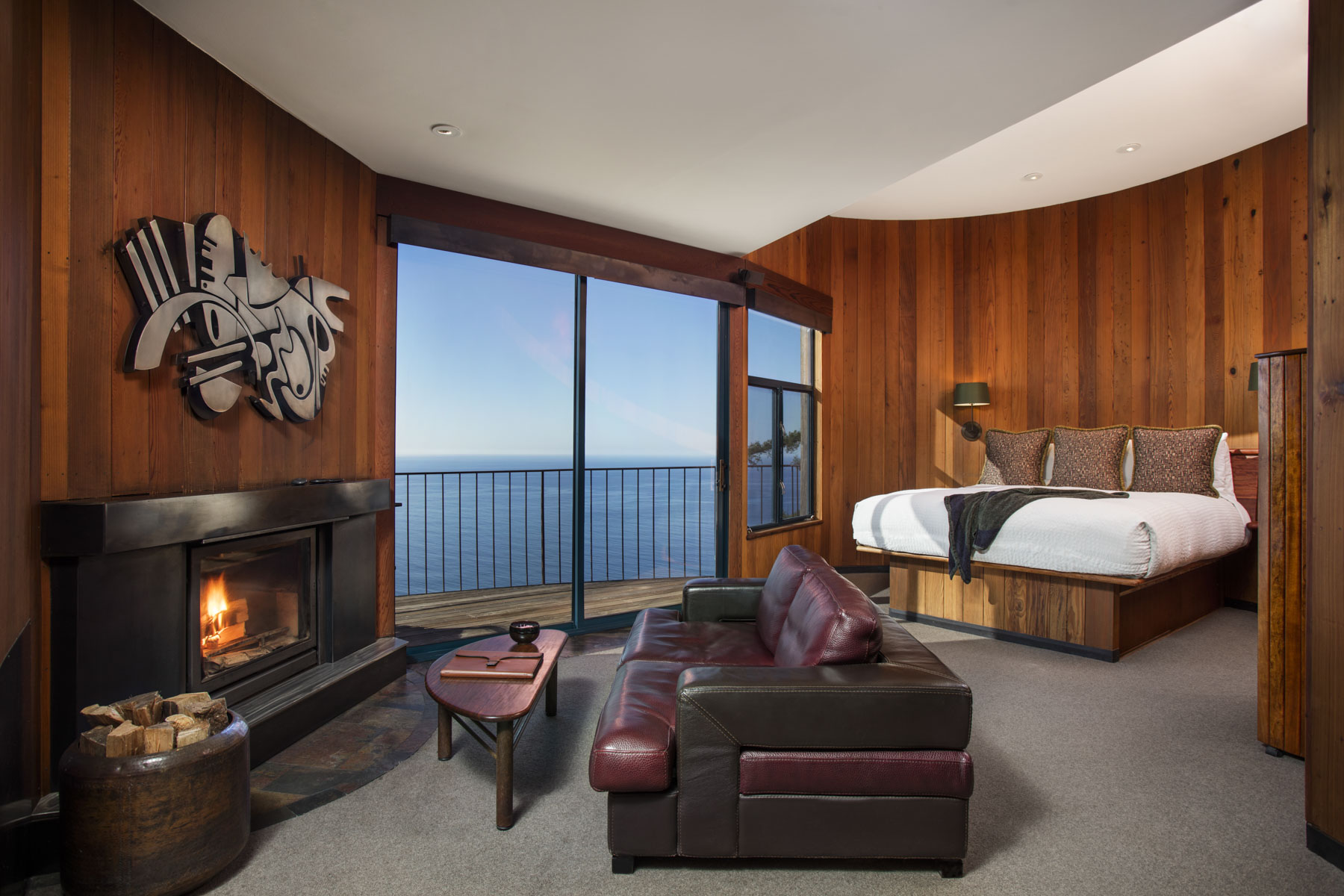
The term “romantic” in the hospitality sector is often misappropriated, used to signal a specific design aesthetic—typically characterized by dim lighting, localized architecture, and premium pricing. However, for the serious strategist, a romantic destination is defined by the absence of administrative and environmental friction. The most successful Romantic boutique destinations usa are those that offer “operational intimacy”—a state where the property anticipates needs through systemic observation, rather than intrusive, high-touch intervention. The distinction is subtle but critical.
Common misunderstandings arise when travelers prioritize visual “romantic” markers (e.g., in-room fireplaces, vintage décor) over functional reliability. A property can be visually stunning while failing to provide the basic infrastructural integrity—soundproofing, climate control, or digital privacy—necessary for an uninterrupted stay. Oversimplification leads to disappointment. To master this sector, one must shift from an emotional appraisal of the “vibe” to an objective assessment of the “system.” Is the property designed to prioritize the guest’s privacy, or is it designed to maximize the property’s social media visibility? The answer determines the success of the endeavor.
Deep Contextual Background
The evolution of boutique lodging in the United States tracks the broader transition from the mass-market “Grand Hotel” model of the 20th century to the fragmented, hyper-personalized economy of the present. Following the mid-century standardization of hospitality, there was a predictable backlash—a re-valuation of the unique, the specific, and the “of the place.” However, as the sector matured, private equity and major hospitality conglomerates began to standardize the “boutique” aesthetic, leading to a proliferation of “manufactured” properties that occupy the space of the boutique while operating on corporate rails.
Understanding the history of these destinations allows the practitioner to identify the “DNA” of the asset. Some properties are the result of visionary owner-operators who built their reputation on local integration and decades of institutional knowledge. Others are assets within “soft-brand” collections—corporate-managed properties that retain a local facade but operate on centralized, rigid procurement and service protocols. Discerning between these two origins is essential for managing expectations regarding flexibility, problem resolution, and the “human” quality of the service provided.
Conceptual Frameworks and Mental Models
To impose professional discipline on the evaluation of Romantic boutique destinations usa, one must apply structural frameworks that strip away the marketing layer:
-
The Frictionless Index: Evaluate the transition from arrival to room. True luxury is the absence of administrative friction. Properties that force a 15-minute check-in process while taking a credit card imprint are failing the fundamental test of high-end service density.
-
The Cultural Integration Model: Does the destination act as a bridge to the local environment or a barrier to it? Top-tier options facilitate access to the local culture—via curated dining, local art, or neighborhood insights—rather than creating an insular, isolated bubble.
-
The Asset Utility Threshold: Evaluate the property’s longevity. Is the furniture designed for a photoshoot (high aesthetic, low durability), or is it designed for a multi-year life cycle (high quality, timeless design)? High-quality physical assets are a reliable indicator of long-term operational commitment.
Key Categories or Variations
| Category | Typical Asset | Service Model | Primary Risk |
| True Independent | Single-property, owner-managed | Highly personalized/fluid | Operational instability |
| Corporate “Soft Brand” | Part of a larger chain collection | Standardized “luxury” protocols | Lack of true local integration |
| Adaptive Reuse | Converted historic building | Design-centric | Physical layout/noise flaws |
| Urban Sanctuary | High-tech, city-center | Efficiency/Privacy | Environmental impact |
| Remote Retreat | Secluded lodge/cabin | Nature-centric | Logistical isolation |
Realistic decision logic dictates that you should prioritize the category that aligns with the stay’s objective. Do not attempt to force an “Adaptive Reuse” property (often plagued by thick walls, small windows, and plumbing quirks) to function as a high-speed corporate hub. Conversely, do not seek “True Independent” hospitality from a “Corporate Soft Brand” and expect the owner to handle your special request personally.
Detailed Real-World Scenarios
-
Scenario 1: The High-Stakes Anniversary. A couple requires a seamless 48-hour window without logistical interruptions. Decision: Prioritize “True Independent” assets with a long-standing General Manager. Failure Mode: Booking a high-volume boutique that relies on rotational staff; if the front-desk team changes, the “personalized” request is often lost.
-
Scenario 2: The Intellectual/Cultural Retreat. A pair needs deep immersion into a historic or creative locale. Decision: “Adaptive Reuse” properties. Constraint: Accept that these buildings often trade modern soundproofing for historical authenticity. Second-Order Effect: The immersion into the building’s history provides better cultural context than a modern luxury tower.
-
Scenario 3: The Productivity-Focused Getaway. The travelers need to combine leisure with high-stakes remote work. Decision: Target “Urban Sanctuaries.” Constraint: Ensure the property has verified dedicated workspace; a “romantic” room with a tiny desk is a failure point for productivity.
Planning, Cost, and Resource Dynamics
The economic management of luxury lodging requires a shift toward “Total Landed Value” (TLV). Many of the Romantic boutique destinations usa mask their costs within “resort fees” or “amenity levies” because they cannot always achieve the high base rates of major chains.
| Cost Component | Impact | Variability |
| Base Asset Rate | Moderate | High seasonality |
| Operational Friction | High | Hidden; impacts time value |
| Auxiliary Service Fees | High | Often non-negotiable |
| Opportunity Cost | High | Value lost if environment is misaligned |
When analyzing the price point, do not look at the nightly rate in isolation. A $400 room with a $50 daily resort fee and $40 daily parking is structurally more expensive than a $480 room that includes those services.
Tools, Strategies, and Support Systems
-
The “Pre-Arrival Audit”: Contact the property’s concierge desk via email three days before booking. The speed, sophistication, and professional tone of their response are a leading indicator of the operational standard you will experience.
-
The GDS Inspection: Utilize travel-advisor-focused platforms. These platforms often capture the specific “perks” (breakfast, late checkout, room upgrades) that boutique properties offer to established travel agencies, which are rarely surfaced on public consumer sites.
-
Meta-Review Analysis: Ignore the 5-star or 1-star reviews. Focus exclusively on the 3-star reviews. They contain the most nuanced, honest feedback regarding operational failures that the property’s marketing team has failed to scrub.
-
Loyalty Tier Verification: While most boutique properties are not part of major points programs, many belong to “collections” (e.g., Leading Hotels of the World, Relais & Châteaux). These collections maintain rigorous quality standards that are more reliable than individual hotel branding.
-
Digital “Paper Trail” Verification: Always book directly if possible, or through a channel that provides a transparent folio. Many properties in the United States are notorious for “surprise” billing issues because their PMS (Property Management Systems) are often poorly integrated.
Risk Landscape and Failure Modes
Risk in the US boutique sector is idiosyncratic. A property that is excellent in June may be operationally crippled by a change in management or a shift in revenue strategy.
-
Management Drift: Boutique properties are highly dependent on the “gatekeeper”—the General Manager. If that person changes, the entire operational culture can vanish.
-
The “Instagram” Trap: High-quality photography often masks operational decay. A property can look pristine on a website while suffering from failing infrastructure.
-
Supply Chain Fragility: Remote boutique resorts often suffer from “logistical isolation.” If the area relies on a single supply chain, a minor disruption leads to systemic service failure.
-
The Ownership Pivot: A sudden change in property ownership often leads to an immediate, invisible degradation in service as the new owners seek to “optimize” (cut) costs.
Governance, Maintenance, and Long-Term Adaptation
Treat your preferred lodging assets as a portfolio that requires ongoing auditing. A formal methodology for identifying and utilizing lodging assets should include a periodic review.
-
The Asset Performance Ledger: Maintain a record of every boutique asset utilized. Document the delta between the marketing promise and the actual delivery.
-
The Quarterly Audit: Re-evaluate your list of potential assets. A property that was excellent two years ago may have suffered from fee creep or service stagnation.
-
Layered Checklist:
-
Structural: Does the property provide an all-in quote?
-
Operational: Is the staff capable of handling non-standard, negotiated bookings?
-
Strategic: Does the property value long-term loyalty or short-term transactional revenue?
-
Measurement, Tracking, and Evaluation
Evaluation must move beyond subjective sentiment. Rely on empirical performance indicators to determine if an asset is worth retaining in your portfolio.
-
Leading Indicators: The responsiveness and technical accuracy of the management during the procurement phase. A team that struggles to negotiate professionally will struggle to deliver a professional stay.
-
Lagging Indicators: “Fee Creep”—the amount of unexpected fees that appeared on the final folio that were not disclosed in the booking.
-
Qualitative Signals: Observe how staff react to non-standard requests. Do they solve the problem, or do they refer you to a policy manual? The latter is a sign of a “tourist-first” operation, not an intimate, guest-first asset.
-
Documentation Example: The “Asset Utility Audit”—a post-stay document that ranks the property on specific metrics like price transparency, network stability, and service autonomy.
Common Misconceptions and Oversimplifications
-
Myth: “Boutique hotels are inherently more transparent.” Correction: They are often less transparent because they lack the standardized corporate disclosures of major chains.
-
Myth: “I can rely on online reviews for service warnings.” Correction: Reviews are often biased toward leisure travelers who may not be tracking the total economic impact of the stay.
-
Myth: “The owner is always present to fix things.” Correction: The owner is often the person creating the friction by being too involved in the micromanagement of the revenue yield.
-
Myth: “I can avoid fees by using points.” Correction: Many properties have introduced mandatory “resort fees” that even points-based bookings must pay.
-
Myth: “Boutique means small.” Correction: Boutique refers to the management approach and design ethos. There are properties with 200+ rooms that manage to retain an intimate feel through superior zoning and staffing.
Ethical and Contextual Considerations
The selection of a luxury asset carries an inherent ethical responsibility. Many such properties are located in gentrifying neighborhoods or fragile ecosystems. When evaluating the viability of an asset, consider the property’s relationship with its local community. Does the boutique operation support local labor, or does it import staff while displacing residents? Selecting assets that demonstrate a genuine commitment to their location is a form of risk mitigation; properties that alienate their local ecosystem eventually become isolated and operationally brittle. Furthermore, when analyzing Romantic boutique destinations usa, maintain a standard of professional integrity. Seek a fair value exchange, not an extraction of margin that threatens the viability of the local business.
Conclusion
The pursuit of the right boutique asset is fundamentally an exercise in operational strategy, not interior design. By approaching the process of identifying Romantic boutique destinations usa with the rigor of a project manager rather than a vacation planner, organizations and individuals can secure environments that do more than house a stay—they provide a competitive advantage. Excellence in this domain is found in the willingness to look beneath the surface, the skepticism required to challenge the aesthetic veneer, and the intellectual honesty to prioritize function over form. A truly successful stay is one where the environment becomes an invisible, yet powerful, facilitator of the objective at hand. The asset is merely the substrate; the plan is the foundation.