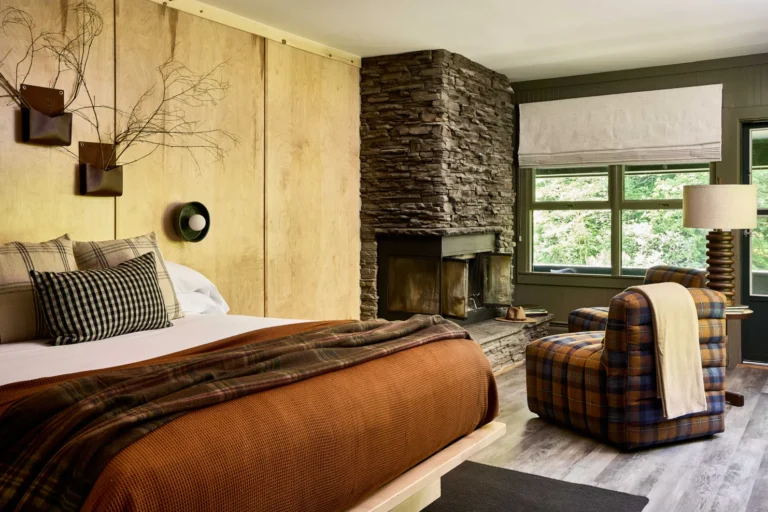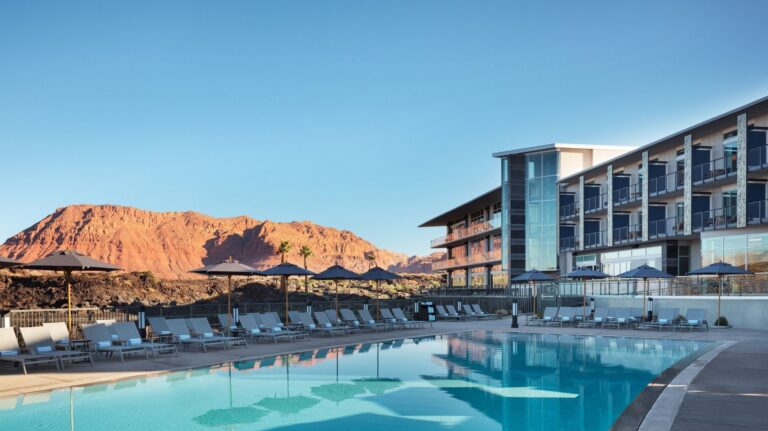
Best boutique stays in the us: A Senior Editorial Strategy for Procurement
The hospitality industry within the United States is currently navigating a period of profound restructuring. This provided comfort through redundancy. However, the contemporary market has pivoted. A significant segment of travelers now views standardization not as a feature, but as a limitation. The rise of the independent boutique hotel—defined by architectural specificity, localized narrative, and operational autonomy—has shifted the focus from mass-market efficiency to curated environmental impact.
Yet, this shift has introduced a layer of complexity for the serious traveler. Because these properties operate without the overarching governance of global brand standards, the variance in quality, operational maturity, and structural integrity is immense. When considering the best boutique stays in the US, the first hurdle is distinguishing between assets that are genuinely committed to craft and those that are simply using a “boutique” aesthetic to mask a lack of operational discipline. The following analysis is intended to provide a framework for discerning the substance of these properties rather than relying on the ephemeral veneer of marketing collateral.
Understanding the best boutique stays in the US

The phrase Best boutique stays in the US “ is often treated as a definitive ranking—a list of top-ten properties curated by an algorithm or a paid focus group. This is fundamentally flawed. In a sector defined by idiosyncratic ownership and local integration, “best” is a relative term that must be anchored to the traveler’s specific intent. Are you seeking an environment optimized for deep-focus professional work? Are you looking for a historic adaptive reuse project that preserves regional architectural heritage? Or are you identifying a base of operations that facilitates access to a specific cultural or geographic ecosystem?
The oversimplification risk here is severe. Travelers frequently equate “best” with “most expensive” or “most photogenic.” This heuristic often leads to properties that are visually arresting but operationally fragile—assets that provide a high-fidelity image but fail to deliver a consistent, functional stay. To truly identify the best boutique stays in the US, one must move beyond the “star rating” mindset and adopt an operational audit approach. This involves evaluating the property’s longevity, the stability of its management, the robustness of its infrastructure (e.g., soundproofing, connectivity, climate control), and the clarity of its communication protocols. It is about aligning the asset’s strengths with your specific requirements.
Deep Contextual Background
In the late 20th century, the “Boutique” designation was an intellectual reaction against the interstate highway sprawl and the sanitized anonymity of the mid-market franchise. Early pioneers sought to integrate properties into the historic fabric of cities or the rugged isolation of the natural landscape. This required significant capital expenditure and a willingness to operate outside the safety of established chains.
However, the 2010s and 2020s have seen the professionalization of the sector. What began as a scattered movement of independent visionaries has become a competitive marketplace. Large real estate investment trusts (REITs) have recognized the margin potential in “experiential” lodging. Consequently, the landscape is now split between two distinct types: the “Authentic Independent,” which remains tied to a specific ownership structure and local narrative, and the “Lifestyle Chainlet,” which is designed to look and feel independent but is governed by standardized corporate protocols. Recognizing this distinction is essential for anyone attempting to categorize the best boutique stays in the US, as the operational risks and the quality of the “boutique” experience vary wildly between these two archetypes.
Conceptual Frameworks and Mental Models
To master the selection process, apply the following frameworks to evaluate prospective properties:
-
The Asset Utility Matrix: Map the property’s attributes (connectivity, workspace ergonomics, acoustic isolation, service hours) against your primary objective (e.g., business productivity, restorative rest, immersive exploration). A property that excels at one and ignores the other is not “the best”; it is merely misaligned.
-
The Operational Maturity Index: Analyze the property’s digital footprint. Does it have a functional, secure, direct-booking portal? Does it respond to technical inquiries with specificity? High operational maturity usually correlates with high asset reliability.
-
The Neighborhood Context Model: A boutique property is a vessel for its location. A property that feels like an “island”—disconnected from the surrounding culture or ecology—has failed its fundamental promise. The best properties act as a bridge to their environment.
Key Categories or Variations
Categorizing the best boutique stays in the US requires understanding that these properties serve different masters. A high-desert compound in New Mexico is not competing with a restored warehouse in Chicago. They occupy different structural and functional niches.
Detailed Real-World Scenarios
-
Scenario 1: The Corporate Retreat. A team of ten needs a secluded environment for a week of strategy sessions. Decision: The property must have “institutional-grade” Wi-Fi and adequate communal workspace. Constraint: Avoid “design-forward” properties that lack common-area tables.
-
Scenario 2: The Architectural Pilgrimage. A professional visits a city to study its mid-century modern influence. Decision: Prioritize properties that are themselves architectural subjects. Constraint: The property must be maintained to the original standards. Failure Mode: A “mid-century themed” hotel that is actually a modern shell with cheap, reproduction decor.
-
Scenario 3: The Extended-Stay Professional. A consultant needs a month in a specific city. Decision: Shift focus from “hotels” to “serviced apartments” or “boutique extended-stay” assets. Constraint: The asset must have an on-site kitchen and laundry facility. Failure Mode: Assuming a standard boutique hotel can support a 30-day residency without massive cost inflation.
Planning, Cost, and Resource Dynamics
The resources required for high-level travel are often misallocated. When researching the best boutique stays in the US, consider that the nightly room rate is only the entry point.
Planners must treat the asset as a platform. The goal is to maximize the utility of the stay relative to the price paid, not just to find the lowest nightly cost.
Tools, Strategies, and Support Systems
-
The Direct-Inquiry Protocol: Bypass the booking engine for complex stays. Email the management. The quality and specificity of their response is the most reliable predictor of the stay’s quality.
-
Infrastructure Audits: For professional travel, ask specific questions about Wi-Fi architecture, soundproofing, and HVAC control. If they cannot answer, the asset is not built for your needs.
-
Local “Fixer” Relationships: For cities with high boutique density, cultivate a relationship with a local concierge or professional network. They have insights into which properties are currently “hot” (high visibility) versus which are “operational” (high reliability).
-
Payment Hygiene: Use credit cards with robust fraud protection. Boutique properties often have weaker internal payment security than major chains.
-
Digital Redundancy: Always carry an independent connectivity solution (mobile hotspot). Never rely on a hotel’s internal network for mission-critical professional work.
Risk Landscape and Failure Modes
The boutique sector is defined by its autonomy, which also makes it prone to catastrophic failure.
-
Management Drift: Independent hotels rely on the “gatekeeper” (the GM or lead owner). If that person changes, the entire operational culture of the property can disintegrate in months.
-
The “Instagram Veneer”: High-quality photography can hide maintenance failures, noise pollution, and subpar room sizing. Always verify the physical context via satellite mapping.
-
The “Closed” Loop: Some boutique properties are essentially private clubs. They may not have the service infrastructure to support a professional traveler’s needs (e.g., early breakfast, late check-out).
-
Systemic Fragility: A single incident—a burst pipe, a staffing walkout, a software failure—can derail a 20-room hotel’s entire operation for days. Large chains have redundancy; boutique hotels do not.
Governance, Maintenance, and Long-Term Adaptation
Treat your preferred properties as a portfolio that requires ongoing auditing. A formal methodology for identifying the best boutique stays in the US should include a periodic review.
-
The Asset Performance Ledger: Maintain a record of every boutique asset utilized. Document the delta between the marketing promise and the actual delivery.
-
The Quarterly Audit: Re-evaluate your list of potential assets. A property that was excellent two years ago may have suffered from maintenance neglect or management changes.
-
Layered Checklist:
-
Structural: Does the building support the use case (acoustics, connectivity, comfort)?
-
Operational: Is the staff capable of handling non-standard requests?
-
Strategic: Is the location an asset or a limitation?
-
Measurement, Tracking, and Evaluation
Evaluation must move beyond subjective sentiment. Rely on empirical performance indicators to determine if an asset is worth retaining in your portfolio.
-
Leading Indicators: The responsiveness and technical accuracy of the management during the procurement phase. A team that struggles to negotiate professionally will struggle to deliver a professional stay.
-
Lagging Indicators: The “Operational Variance”—the delta between the planned itinerary and the actual execution, caused by site-specific failures (e.g., unexpected fees at checkout, room discrepancies).
-
Qualitative Signals: Observe how staff react to non-standard requests. Do they solve the problem, or do they refer you to a policy manual? The latter is a sign of a “tourist-first” operation.
-
Documentation Example: The “Asset Utility Audit”—a post-stay document that ranks the property on specific metrics like acoustic isolation, network stability, and service autonomy.
Common Misconceptions and Oversimplifications
-
Myth: “Boutique hotels are always more expensive.” Correction: They are often more efficient for specific use cases. The cost of a room at a boutique hotel can be offset by not having to pay for external workspaces or specialized services.
-
Myth: “Design is an indicator of quality.” Correction: Design is often a distraction from operational inadequacy.
-
Myth: “I can rely on online reviews.” Correction: Reviews are often biased toward leisure travelers. A property that is great for a weekend couple’s trip can be a disaster for a team of professionals.
-
Myth: “The owner is always present to fix things.” Correction: The owner is often the person creating the friction by being too involved in the micromanagement of the guest experience.
Ethical and Contextual Considerations
The selection of boutique assets carries an inherent ethical responsibility. Many such properties are located in gentrifying neighborhoods or fragile ecosystems. When evaluating the viability of an asset, consider the property’s relationship with its local community. Does the boutique operation support local labor, or does it import staff while displacing residents? Selecting assets that demonstrate a genuine commitment to their location is a form of risk mitigation; properties that alienate their local ecosystem eventually become isolated and operationally brittle.
Conclusion
The pursuit of the right boutique asset is fundamentally an exercise in operational strategy, not interior design. By approaching the process of identifying the best boutique stays in the US with the rigor of a project manager rather than a vacation planner, organizations and individuals can secure environments that do more than house a stay—they provide a competitive advantage. A truly successful stay is one where the environment becomes an invisible, yet powerful, facilitator of the objective at hand. The asset is merely the substrate; the plan is the foundation.